
BJP Modi Govt Forcing 140 Crore People To Use Ethanol Mix Petrol: Are 140 Crore People Animals In Front Of Modi Govt ?
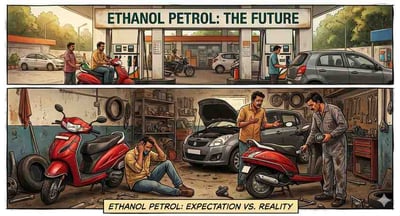
The rapid implementation of the national Ethanol Blending Programme has triggered a massive wave of discontent among everyday vehicle owners across India. What began as scattered complaints on social media platforms has now transformed into visible street protests, notably at locations like Jantar Mantar in New Delhi. Motorists are gathering to voice their extreme frustration over the forced adoption of E20 fuel, which is a mix of 20 percent ethanol and 80 percent petrol. Everyday drivers are reporting sudden vehicle stalling, fuel filter clogging, and significant damage to the fuel pipelines of their cars. Many of these citizens state that they feel left without a choice, as regular unblended petrol has been completely phased out from retail fuel stations nationwide, forcing millions to buy a fuel type that they believe is actively degrading their personal property.
A major point of conflict between vehicle owners and policymakers revolves around the severe drop in fuel efficiency. While official sources and laboratory tests conducted by agencies like the Automotive Research Association of India initially maintained that the shift would cause only a minor 3 to 6 percent decline in mileage, real world experiences tell a drastically different story. Drivers of popular hatchbacks and sedans manufactured before 2023 have documented mileage drops as high as 20 to 22 percent. For instance, commuter vehicles that previously delivered 18 kilometers per liter are suddenly struggling to reach 14 kilometers per liter. This substantial drop effectively increases the daily commuting costs for the middle class, who are paying the exact same premium price for a fuel that delivers significantly less energy density and lower calorific value.
The issue has taken a highly controversial political turn with serious corporate links coming under public scrutiny. Critics and opposition parties have raised intense questions about specific ethanol manufacturing companies managed directly by the family members of Union Minister Nitin Gadkari. His sons Nikhil Gadkari and Sarang Gadkari manage entities named Cian Agro Industries and Manas Agro Industries, which are key players in the commercial production of bioethanol for fuel blending. Public financial disclosures reveal that these entities witnessed a staggering surge in revenues and market capitalization over a very brief period, with stock values jumping significantly following the nationwide enforcement of the blending targets. This massive accumulation of corporate wealth by politically connected business ventures has led to allegations that the administration is aggressively pushing the mandate to benefit specialized ethanol producing entities while leaving millions of ordinary car owners to handle the severe mechanical consequences.
Mechanically, the high concentration of ethanol presents serious long term challenges for older internal combustion engines. Ethanol is highly hygroscopic by nature, meaning it actively attracts and absorbs moisture from the surrounding environment. This moisture accumulation leads to water contamination inside fuel storage tanks at petrol pumps and within individual vehicle systems, causing internal corrosion and severe rust. Automotive enthusiasts and mechanics point out that essential rubber components, gaskets, seals, and fuel lines are deteriorating rapidly because they were never engineered to withstand the corrosive properties of high ethanol blends. Replacing a choked fuel filter or a ruined fuel line can cost a motorist anywhere between Rs 25000 and Rs 80000 depending on the vehicle segment, creating an unexpected and heavy financial burden on families who rely on their cars for daily livelihood.