
Delhi BJP Govt Bans Petrol And Allows Only Battery Bikes by 2028 Adani Group Deploys Massive 15000 Crore Rupees Battery Storage Investment
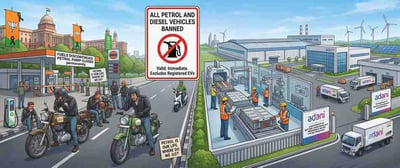
The Delhi BJP govt bans petrol powered and CNG powered scooters and motorcycles starting from April 1 2028, enforcing a total restriction across the capital city to mandate a swift transition toward zero emission electric transport. This landmark policy completely halts the registration of all new internal combustion 2 wheelers, forcing daily commuters and commercial logistics fleets to embrace battery operated alternatives. Because 2 wheelers comprise nearly 67% of the total vehicular inventory across the metropolitan region, this legislative move addresses the core cause of seasonal urban smog. To minimize systemic friction for buyers, the administration introduced extensive financial safety nets, including direct purchase incentives of up to 30000 rupees during the 1st year rollout phase, alongside a total 100% complete waiver on standard road taxes and official vehicle registration fees at all regional transport offices.
While this aggressive regulatory shift effectively forces a rapid consumer migration on the urban demand side, it exposes a critical structural vulnerability regarding the peak load management of the regional electricity grid. If 1000000 commuter vehicles plug into charging stations simultaneously during evening hours, it will inevitably trigger massive electrical surges that threaten the stability of local transmission lines. Furthermore, if the electricity powering this upcoming clean energy fleet originates from traditional thermal power plants burning fossil fuels, the ultimate goal of environmental preservation remains unfulfilled. This operational gap requires massive investments in utility scale grid infrastructure capable of capturing variable solar and wind energy during the day and distributing it reliably during high demand periods, creating a critical need for immense storage capacity.
Answering this precise infrastructure requirement, the corporate sector stepped forward with the Adani massive battery storage investment, which outlines a massive 15000 crore rupees capital deployment plan specifically for the next phase of capacity expansion. The group successfully operationalized its core infrastructure base by March 2026, delivering a pioneering 1126 Megawatt power capacity and 3530 Megawatt hour energy capacity facility at Khavda, Gujarat, which has since scaled up to 3.37 Gigawatt hours of cumulative operational storage. The installation effectively captures excess green energy during peak generation hours, preventing the forced curtailment of solar power when regional transmission networks face overload. By committing 15000 crore rupees to scale up this storage footprint by over 10 Gigawatt hours in the current fiscal cycle, the company ensures that vast amounts of variable green power can be saved and smoothly dispatched later.
The overlapping timelines of the municipal vehicle mandates and the massive corporate battery storage rollout reveal a deeply connected clean energy ecosystem where demand side policy cannot succeed without heavy supply side backing. The 15000 crore rupees expansion plan aims toward a larger 5 year strategic objective of 50 Gigawatt hours of total battery storage across the nation, providing the necessary industrial scale to absorb massive upcoming electric vehicle charging spikes. However, the rapid deployment of lithium ion systems across the country must face scrutiny regarding heavy international reliance on critical raw materials and battery cell supply chains, which could fluctuate significantly as global trade disputes evolve. By establishing a clear end date for petrol vehicle registrations while deploying gigawatt scale grid batteries, the combined efforts of public policy and private capital ensure that the electricity powering the upcoming vehicle boom comes from a clean, reliable, and sustainable source.