
Centre Informs Supreme Court It May Appoint Expert Panel To Re-Examine UGC Campus Equity Regulations Following National Protests
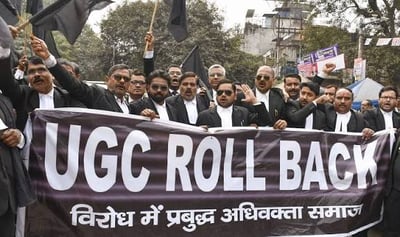
The central government has informed the Supreme Court of India that it is contemplating appointing an expert committee to review and redraft the controversial University Grants Commission regulations on equity in higher educational institutions. The move comes in response to widespread criticism, student agitation, and serious judicial concerns regarding vague definitions and potential misuse of the campus anti-discrimination guidelines. During a hearing before a bench headed by the Chief Justice, the Solicitor General stated that the administration is actively examining objections raised by various campus groups and is considering constituting a dedicated panel to suggest balanced modifications to the rules.
The controversial rules, formally notified as the University Grants Commission Promotion of Equity in Higher Educational Institutions Regulations, were introduced to replace the older 2012 framework. The initiative originated from long pending public interest petitions, notably filed by the mothers of Rohith Vemula and Payal Tadvi, who had both tragically lost their lives following alleged caste discrimination at higher education institutions. The petitions sought robust statutory mechanisms to prevent institutional bias, caste harassment, and discriminatory treatment on university campuses across the country. In response, the higher education regulator issued the refreshed regulations mandating that every university and college set up an Equity Cell, appoint an Anti-Discrimination Officer, and institute mandatory sensitivity training.
However, almost immediately after notification, the regulations triggered intense opposition from several student organizations and faculty associations. Upper-caste student bodies launched demonstrations alleging that the provisions were excessively broad, lacked necessary safeguards against fabricated complaints, and could be misused to deepen caste divisions within academic spaces. Critics specifically noted that while the regulations outlined stringent punitive actions for discriminatory acts, they failed to provide clear legal definitions of what constitutes discriminatory behavior or lay down penalties for malicious complaints. The lack of clarity raised fears of arbitrary enforcement by institutional administrations.
Taking note of these arguments, the Supreme Court had stepped in earlier to impose a temporary stay on the implementation of the 2026 regulations, describing them as prima facie vague and prone to misuse. While granting the stay, the court clarified that the pause would not affect underlying constitutional protections under Articles 15, 16, and 17, nor would it dilute existing affirmative action reservations in higher education. The bench directed that universities and colleges continue functioning under the older 2012 regulations until a clearer, legally sound framework could be established.
During the latest proceedings, the law officer appearing for the Centre submitted that the government recognizes the need to protect the interests of all students and ensure fair academic environments. The government explained that the proposed expert committee would review the text of the regulations in detail, consult representatives from diverse student groups, and draft precise guidelines that prevent harassment without creating room for unfair targeted actions. The Chief Justice emphasized that ensuring equity while preventing institutional friction is critical for the smooth running of university campuses.
Following the submission by the central government, the Supreme Court adjourned the matter for four weeks, granting the Centre time to take a formal decision regarding the constitution of the review committee and place its roadmap on record. The upcoming review is viewed as a crucial step toward finding a balanced framework that can safeguard marginalized students from institutional prejudice while maintaining harmony, academic discipline, and procedural fairness across Indian higher educational institutions.