
CJP Announces Jantar Mantar At Kochi Protest Against Special Intensive Revision As Abhijeet Dipke Prepares To Join Southern Campaign
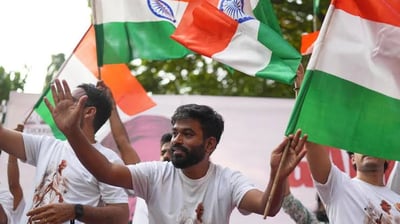
The Cockroach Janta Party, commonly known as CJP, has announced a major public demonstration in the southern coastal city of Kochi against the Special Intensive Revision of electoral rolls. The planned gathering has been titled Jantar Mantar at Kochi by party organizers, drawing direct symbolic inspiration from the historic national protest ground located in the heart of the national capital. The announcement marks the very first large scale political offensive organized by the political outfit since its senior national leadership was taken into police detention in New Delhi last month during confrontations over electoral policies. Activists, student volunteers, and regional opposition figures are mobilizing support to challenge what they describe as unfair administrative hurdles placed on citizen voting rights.
According to the official schedule shared by party coordinators, the demonstration will assemble at Rajendra Maidan in Kochi on November 7 at four in the afternoon. The movement has adopted the central public slogan Save Democracy Cancel SIR, appealing directly to citizens, trade union workers, and civil liberties defenders to join hands against the controversial voter verification drives conducted by election authorities. Organizers confirmed that party founder Abhijeet Dipke will personally travel to Kerala to take part in the event, alongside party south zone media lead Vijay Mallangi and national secretary Aafreen Nawaz. The gathering is intended to demonstrate that public anger over voter roll manipulation is not limited to northern states, but resonates strongly across peninsular India.
The fresh call to action carries deep political significance because of the turbulent events that unfolded in New Delhi during October. Abhijeet Dipke, along with senior colleagues Ashutosh Ranka and Saurav Das, was detained by Delhi Police while attempting to stage an unapproved demonstration near Jantar Mantar against Chief Election Commissioner Gyanesh Kumar and the implementation of the intensive voter revision exercise. Soon after those street confrontations, the central government took the controversial administrative step of removing Jantar Mantar from the list of officially recognized protest locations. In response to the ban, Das and Ranka allegedly breached the restricted boundary and unfurled the national tricolor flag, leading to their arrest and a week-long stay in judicial custody before securing bail under strict judicial undertakings.
Abhijeet Dipke faced his own legal restrictions after announcing a separate tricolor gathering at Central Park in Connaught Place, which resulted in his detention and subsequent release under conditional bail terms overseen by a special executive magistrate. One of the key conditions imposed on his freedom required him to give an undertaking ensuring that there would be no breach of public peace on his part for a full year. While the capital city administration placed strict boundaries on public gatherings in central Delhi, CJP organizers decided to take their political agitation outside the northern power corridors, selecting Kerala as the launching pad for their next phase of street resistance.
The political landscape in New Delhi witnessed further friction when CJP offered its formal support to a protest march organized by the opposition INDIA bloc on November 1. However, the outfit chose not to sit on the stage during the major rally addressed by Congress leader Rahul Gandhi at the Ramlila Maidan, maintaining its independent organizational identity while backing shared democratic concerns. Addressing that national rally, opposition leaders had sharply attacked election authorities over alleged voter fraud and deletion of marginalized voters, demanding judicial accountability and institutional transparency from the poll body.
At the center of the dispute remains the Special Intensive Revision, which civil rights groups and opposition parties argue has been used to place unnecessary burdens on voters. Critics point out that forcing citizens to produce ancestral documents, proof of grandparents on historical rolls, and complex residential records threatens to disenfranchise millions of migrant workers, poor families, and young first time voters. While election officials maintain that intensive reviews are necessary to clean duplicate entries and update electoral data, protest organizers contend that arbitrary administrative rules without parliamentary backing undermine constitutional guarantees of universal adult franchise.
The choice of Rajendra Maidan in Kochi holds deep historical meaning for public gatherings in Kerala. For decades, the public ground facing the Arabian Sea backwaters has been a traditional home for free speech, labor meetings, and historic political struggles in the state. By titling the program Jantar Mantar at Kochi, the party seeks to create a direct symbolic link between the suppressed democratic spaces of New Delhi and the vibrant protest culture of Kerala. Local coordinators stated that opening up southern platforms will encourage regional intellectuals, cultural figures, and youth groups to add their voices against executive overreach.
Security agencies and local police in Kochi have taken notice of the scheduled event and are monitoring developments ahead of the weekend gathering. While Kerala has a strong tradition of peaceful democratic assembly, law enforcement officials are reviewing guidelines to ensure that the assembly remains orderly and free of public disturbance. Party leaders stated that the demonstration will be completely peaceful and conducted in full compliance with constitutional norms, focusing strictly on raising public consciousness about voter rights.
The demonstration arrives at a moment of wider friction between civil society groups and statutory bodies across India. As discussions continue surrounding electoral roll accuracy, digital form requirements, and the independence of regulatory institutions, the Kochi event is positioned to test whether public discontent can build enough momentum to force policy shifts. For CJP and Abhijeet Dipke, stepping onto the stage at Rajendra Maidan on November 7 represents a bold return to active street campaigning, asserting their right to assemble and challenging election authorities to listen to citizen demands.