
Cockroach Blackout As Leader Dipke Lands In Delhi On June 6 But Will He Be Arrested And Labelled Anti National Or Pakistani By The BJP Government After Shocking Cover Up Claims
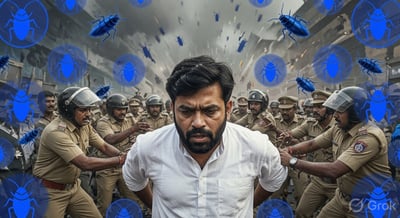
A massive socio-political conflict is sweeping across India as the highly anticipated return of the young founder of the Cockroach Janta Party approaches. Abhijeet Dipke is scheduled to land at the New Delhi airport on Saturday, June 6, directly entering a volatile environment of national student unrest. The movement has transitioned from online satire into a massive physical collective of young citizens who are deeply disillusioned by continuous administrative corruption. Students from small towns and major urban centres are mobilizing to welcome the leader and initiate a peaceful march toward Jantar Mantar. The primary objective is to demand deep systemic accountability and the immediate step down of top administrative heads, but the state response has created an atmosphere of fear regarding immediate airport detentions.
The current anger is completely rooted in a series of institutional failures that have compromised the integrity of the NEET, CBSE, and CUET examination structures. Millions of young citizens spend multiple years sacrificing their mental peace and utilizing hard earned family savings to prepare for these high stakes selection tests. However, continuous leak scandals, technical evaluation glitches, and sudden cancellations have completely shattered the confidence of the youth. To make matters worse, a major controversy erupted following a massive fire breakout near the central administrative offices in New Delhi. While official press statements from the government described the incident as an accidental short circuit at an adjacent educational campus, large groups of student activists are openly claiming that the fire was a deliberate attempt by the ruling administration to burn sensitive data records and cover up the paper leak scams before independent investigative bodies could audit them.
Simultaneously, the regional administration under the Bharatiya Janata Party leadership in Uttar Pradesh has initiated an aggressive clampdown on student assemblies. In major competitive preparation hubs like Prayagraj and Lucknow, police authorities have unexpectedly moved to seal prominent coaching institutes and private tutoring centres under the pretext of sudden fire safety inspections and administrative violations. Student organizers have fiercely criticized these actions, pointing out that the targeted closures are a calculated political strategy to prevent young people from gathering, sharing information, and coordinating travel plans for the upcoming New Delhi protest. This heavy handed approach has only amplified the friction, turning a localized academic grievance into a broader battle over the fundamental right to peaceful democratic expression.
The entire situation demonstrates a highly defensive pattern where genuine outcries regarding career security are answered with institutional force and narrative polarization rather than clear dialogue. Pro government channels and party commentators have already started a digital campaign designed to brand the protesting young students and their leaders as anti national agitators or Pakistani sympathizers trying to ruin the international reputation of the country. This intense labeling tactic is an attempt to redirect public focus away from administrative failures within testing bodies and convert the issue into a national security debate. If the central government continues to choose brute policing, coaching center lockdowns, and aggressive media labels over complete structural transparency, it will permanently alienate an entire generation of future voters who simply want a fair chance at a secure future.