
Sonam Wangchuk And Abhijeet Dipke To Lead Massive Cockroach Janata Party Protest In Delhi Demanding Union Minister Resignation
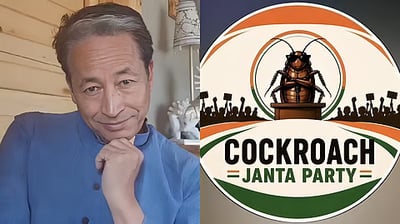
A unique political phenomenon is set to transition from mobile screens to the streets of New Delhi as the Cockroach Janata Party declared a nationwide protest mobilization scheduled for June 6 at Jantar Mantar. Addressing the first official press interaction of the platform at the prestigious Constitution Club of India, chief spokesperson and independent journalist Saurav Das outlined the strategic framework of the demonstration. The core agenda of this gathering centers on demanding the immediate accountability and resignation of Union Education Minister Dharmendra Pradhan. The movement stems from intense youth dissatisfaction regarding structural irregularities, evaluation glitches, and high profile paper leaks in major competitive national examinations including NEET UG and Central Board of Secondary Education assessments. To initiate the event, volunteers and supporters plan to assemble at the international airport to receive their returning founder, Abhijeet Dipke, before collectively marching toward the Parliament Street Police Station to finalize formal administrative permissions for the demonstration.
The upcoming gathering has gained significant social momentum following the high profile endorsement of noted climate activist and education reformer Sonam Wangchuk, who publicly declared himself an honorary member of the movement. Known widely across the nation for his structural advocacy and sustainable reforms, Wangchuk expressed deep concern over the mental anxiety and institutional betrayal experienced by millions of young academic aspirants due to recurring administrative lapses. Founder Abhijeet Dipke, a political communications professional who launched the satirical portal to channel public frustration, is returning from the United States specifically to spearhead this physical assembly despite expressed concerns regarding potential preventive detention by local law enforcement. The swift transition of this digital platform, which amassed millions of virtual followers by satirizing institutional remarks comparing unemployed citizens to household pests, highlights a massive shift in how the younger generation organizes civic resistance. By inviting citizens across the political spectrum to participate without carrying traditional organizational banners, the coordinators are attempting to create a non partisan platform focused entirely on systemic transparency.
This sudden escalation presents a complex public relations challenge for the ruling administration, which has previously attempted to dismiss the movement as digital theater orchestrated by external entities. While the government recently executed administrative changes by transferring senior board officials, the leadership of the movement has rejected these bureaucratic shifts as a superficial eyewash designed to shield top political executives from direct accountability. Analysts observing the situation suggest that while the satirical branding successfully captured the attention of internet users, managing a physical street protest in a highly secure zone like central Delhi requires significant operational discipline. Furthermore, the decision making body of the platform has recently faced critique regarding structural diversity within its initial line of public representatives. Though the coordinators clarified that security concerns and online harassment prevented female volunteers from taking public facing roles immediately, the challenge remains to convert viral internet trends into a cohesive, long term social advocacy tool capable of engaging with institutional bodies.
The outcome of the demonstration on June 6 will serve as a crucial indicator of the actual terrestrial strength possessed by digital youth movements in the modern political landscape. By focusing explicitly on widespread grievances like unemployment and academic testing corruption, the platform has managed to bypass traditional regional blockades and touch a sensitive nerve across diverse socio economic classes. For the ministry, the growing public support for these petitions represents an urgent need to rebuild trust through verifiable, transparent institutional overhauls rather than relying on delayed administrative explanations. The task for the organizers moving forward is to ensure the assembly maintains its strictly peaceful, constitutional character while facing intense political scrutiny and potential security restrictions. If the assembly succeeds in drawing massive physical crowds alongside prominent figures like Wangchuk, it could permanently redefine how civic accountability is demanded in a highly digitized democracy.