
Court Intervention Demanded to Save Sonam Wangchuk Life as Hunger Strike Enters Dangerous Phase
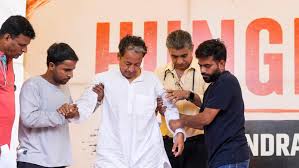
The health of renowned educational reformer and climate activist Sonam Wangchuk has taken a highly critical turn, prompting urgent judicial intervention to save his life. On Wednesday, July 15, 2026, the Delhi High Court agreed to hear a public interest litigation seeking immediate medical intervention for the 59 year old activist. Wangchuk has been on an indefinite hunger strike at Jantar Mantar in New Delhi since June 28, 2026, pushing his body to the absolute limit. The legal petition, filed by lawyer and social activist Rakesh Kumar Saini, paints a grim picture of the situation on the ground, warning that the activist has already lost more than 8.5 kilograms and is experiencing severe muscle loss. The plea argues that allowing the fast to continue without state intervention would amount to a tragic failure of constitutional duties, potentially leading to a fatal outcome within days.
The legal action highlights the growing frustration over the complete silence of the government regarding the ongoing protests. Wangchuk joined the demonstration organized by the Cockroach Janta Party, a youth led satirical movement demanding the resignation of Union Education Minister Dharmendra Pradhan over the highly controversial NEET paper leak case. Despite the protest entering its 25th day and Wangchuk entering his 18th day of fasting, no central representative has stepped forward to engage in a formal dialogue. The petitioner criticized this approach, claiming that the administration is treating a highly respected global figure with the cold indifference usually reserved for hostile actors. The court took serious note of the life threatening circumstances, directing immediate notices to both the central government and the Delhi government to present their stands during an urgent hearing scheduled for July 16, 2026.
At the heart of the legal filing is a controversial demand for medical intervention that challenges the traditional boundaries of peaceful protest. The petition explicitly requests the court to direct authorities to shift Wangchuk to a government hospital where doctors can administer essential nutrients, proteins, and a liquid diet through force feeding. Supporters and family members are caught in an emotional bind, desperately wishing to preserve his life while respecting his fierce commitment to the cause. Close associates report that Wangchuk is in immense physical pain and experiences severe dizziness whenever he attempts to stand, yet he has calmly refused all personal pleas to end the fast. His stance remains clear, as he has repeatedly asked supporters to direct their questions to the government rather than begging him to stop.
This unfolding drama has triggered a massive wave of solidarity across India, uniting opposition leaders, academic institutions, and prominent cultural figures who are urging the government to break its silence. High profile political leaders and over 1800 members of civil society have issued public appeals, stating that Wangchuk is far too valuable to the nation to be sacrificed in this manner. While force feeding is a highly sensitive and legally complex procedure, the petition argues that preventing a tragedy must override all other procedural considerations. As the national capital prepares for the upcoming parliament session, the ruling of the high court will likely set a major precedent on how the state must balance the democratic right to fast with its fundamental obligation to protect human life.