
Protesters Raise Voice at Jantar Mantar Demanding Systemic Reform and Education Minister Resignation
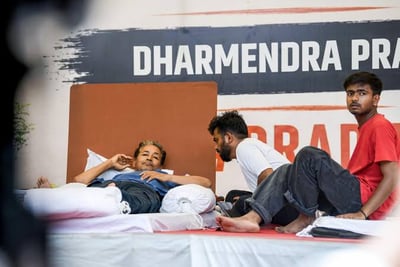
The peaceful protest zone at Jantar Mantar has transformed into the epicenter of a massive national struggle for democratic accountability. As the indefinite hunger strike entered its 17th day on Tuesday, July 14, 2026, the discussion shifted from simple technical failures to a deep moral questioning of the entire national examination system. Dozens of young students, alongside prominent social reformer Sonam Wangchuk, have put their physical well-being on the line to protest the recent NEET-UG and UGC-NET paper leak scandals. The protestors maintain that reducing these massive systemic failures to mere technical glitches is a direct attempt by the government to escape political responsibility. By continuing their fast through intense summer heat and high humidity, the demonstrators are insisting that the credibility of the entire nation academic selection process is at stake, affecting millions of hardworking families who sacrifice everything for their children future.
The driving force behind this movement, organized under the banner of the Cockroach Janta Party, is a profound sense of betrayal felt by young aspirants across the country. For years, students have spent hours preparing for competitive exams, only to see their hard work erased by corrupt networks that leak question papers to wealthy buyers. This ongoing crisis has had tragic real-world consequences, with several depressed students ending their lives due to the sheer uncertainty and anxiety caused by these cancellations. The protestors are demanding the immediate resignation of Union Education Minister Dharmendra Pradhan, arguing that he holds ultimate responsibility for the continuous failures of the National Testing Agency. By refusing to step down or even initiate a meaningful dialogue with the striking students, the political leadership is accused of placing itself above the basic principles of public accountability.
While the government continues to maintain a guarded silence, public support for the fast has grown rapidly, drawing in prominent figures from all walks of life. Political leaders from various opposition parties, including Arvind Kejriwal and Uddhav Thackeray, have expressed deep concern over the rapidly deteriorating health of Sonam Wangchuk, who has already lost around 8.5 kilograms and is suffering from severe muscle weakness. Even cultural figures, like actor Omi Vaidya, have made emotional public appeals to raise awareness about the strike, urging the public to pay attention before the situation turns fatal. The sheer scale of the protest demonstrates that the issue of exam safety has evolved from a student grievance into a broader civil rights movement, uniting parents, academics, and citizens who are tired of institutional corruption and administrative indifference.
As the monsoon session of parliament approaches on July 20, 2026, the organizers are preparing to escalate their movement by conducting a peaceful march to the legislative building. This upcoming demonstration will test the government resolve and force lawmakers to debate the future of the nation examination security on the parliament floor. The striking students have made it clear that their protest is not just about correcting one specific test, but about establishing a permanent system of institutional responsibility where public officials are held answerable to the people they serve. Until the government takes concrete steps to restore trust in the academic system, the quiet determination of those fasting at Jantar Mantar will continue to challenge the conscience of the nation, reminding everyone that a true democracy cannot exist without genuine accountability.