
Delhi High Court Orders Government To Unblock Cockroach Janta Party X Account After NEET Exam Concludes
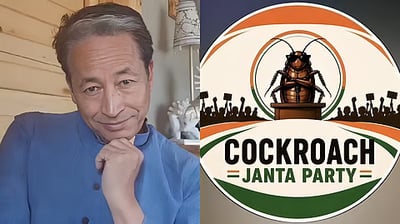
The legal battle over digital free speech and political satire took a major turn on July 7, 2026, as the Delhi High Court directed the central government to immediately revoke its blocking order against the official X account of the Cockroach Janta Party. Justice Swarana Kanta Sharma allowed the writ petition filed by the internet-based movement's founder, Abhijeet Dipke, challenging the sudden suspension of the handle @CJP_2029 which had been withheld in India since May 21, 2026. The landmark decision came after Solicitor General Tushar Mehta, representing the Union Government, formally stated in court that the administration had no further objection to unblocking the social media handle. The government explained that the initial restriction was a temporary preventative measure designed to stop potential misinformation from spreading during a highly volatile national examination period. With the official conclusion of the National Eligibility Cum Entrance Test re-examination cycles, the legal basis for maintaining the digital block was considered resolved.
The dramatic digital clampdown began under Section 69A of the Information Technology Act, 2000, following specific inputs from intelligence agencies regarding potential threats to public order. The Cockroach Janta Party had originally emerged in mid-May as a viral, meme-driven youth movement mocking systemic unemployment, launching shortly after controversial public remarks regarding jobless youth were made during a separate judicial proceeding. The group quickly transformed into an active political protest vehicle, gathering over 200,000 followers within days and eventually amassing a larger digital footprint on alternative platforms than several mainstream political parties. When massive paper leak allegations disrupted the initial NEET medical entrance exams, the group became a focal point for student fury, leading the Ministry of Electronics and Information Technology to order the immediate blocking of the account. The government argued before the bench that several anonymous posts had the real potential to trigger widespread panic and administrative chaos among millions of anxious students and parents at a time when nationwide test security was severely compromised.
From a critical constitutional perspective, this case illustrates the delicate, high-stakes balancing act between maintaining national public order and protecting institutional digital rights. Legal experts and digital safety advocates have consistently pointed out that complete account-level blocking remains an excessively harsh administrative remedy that borders on state censorship. Senior Advocate Akhil Sibal, representing the petitioner, successfully established before the court that even if specific individual posts regarding test schedules were deemed problematic, the state should have isolated those specific messages rather than completely shutting down an entire political platform. By executing a sweeping ban on the primary handle, the administration effectively silenced a critical democratic channel through which thousands of young people were actively communicating their grievances regarding education policies. The government's eventual concession in court proves that temporary national security arguments should not be stretched into permanent digital restrictions once the immediate crisis has safely passed.
The restoration of the social media page comes at a time when the grassroots movement is actively expanding its physical footprint beyond the internet. The Cockroach Janta Party has been coordinating sustained, 18-day sit-in demonstrations at Jantar Mantar in New Delhi alongside various student associations, continuously demanding the formal resignation of Union Education Minister Dharmendra Pradhan over structural examination irregularities. Following the court order, Abhijeet Dipke publicly announced the judicial outcome as a major victory for digital rights and youth expression across the country, though he cautioned that volunteers must remain legally cautious in their commentary. As tech platform engineers move to restore the original handle for Indian IP addresses, this legal development establishes an important precedent regarding online state blockages. It clearly reminds federal regulatory bodies that temporary administrative interventions must have a definitive end date, ensuring that digital public squares cannot be permanently shuttered simply for expressing uncomfortable political satire.