
Uddhav Thackeray Slams BJP Over Ayodhya Ram Mandir Donation Row Claiming Hindus Have Been Hypnotised
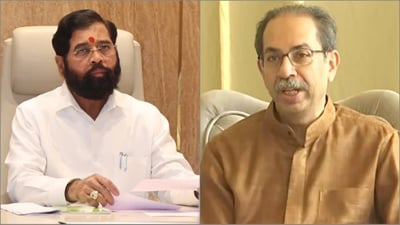
A major political controversy has erupted in Maharashtra after Shiv Sena UBT chief Uddhav Thackeray launched a fierce agitation targeting the Bharatiya Janata Party over alleged financial irregularities at the Shri Ram Janmabhoomi Temple in Ayodhya. Addressing a large gathering of party workers outside the historic Hanuman Temple in Dadar Mumbai, the former Chief Minister alleged that everyday devotees are being systemic defrauded under the guise of religious faith. Clad in a traditional saffron kurta, the leader declared that the majority community has been effectively hypnotised by political rhetoric while their sacred offerings are being mismanaged. The protest rally, which featured the public recitation of religious hymns including the Hanuman Chalisa and the Ram Raksha Stotra, marks a strategic institutional effort by the opposition faction to reclaim the core Hindutva ideological space from the ruling alliance ahead of upcoming state legislative assembly elections.
The immediate trigger for this political mobilization is an ongoing criminal investigation in Uttar Pradesh where local police authorities registered a first information report on June 25 2026 following the preliminary findings of a 3 member Special Investigation Team. The probe into the alleged embezzlement of temple funds came to light on June 7 2026 and has already resulted in the arrest of 8 individuals who were closely associated with the daily cash counting processes at the shrine. The expanding financial controversy also prompted high profile administrative casualties including the resignation of the Shri Ram Janmabhoomi Teerth Kshetra Trust general secretary Champat Rai who stepped down taking moral responsibility for the institutional oversight. Seizing upon these dramatic developments, opposition leaders have raised sharp questions regarding the ultimate fate of valuable items donated during the initial temple movement, including heavy silver bricks contributed by regional units decades ago.
This confrontational rhetoric exposes a deeper structural battle within western India regarding political legitimacy and the inheritance of regional legacies. Since the internal party split of June 2022, when Eknath Shinde led a successful rebellion to form a government with external backing, both factions have claimed to be the authentic voice of the regional political philosophy established by Bal Thackeray. By directly accusing the central government of economic exploitation at prominent religious shrines including Kedarnath and Ayodhya, the opposition leadership is attempting to decouple religious devotion from partisan loyalty. This strategy targets an institutional vulnerability within contemporary politics where the ruling party has long utilized cultural symbols as a primary driver for electoral consolidation. The aggressive stance seeks to demonstrate that being protective of cultural identity does not require blind compliance with the administrative decisions of the state apparatus.
The ruling alliance has responded with equal force by dismissing the agitation as an opportunistic political script engineered by leaders who compromised their original principles to enter into secular coalitions. Government spokespersons emphasized that state law enforcement machinery acted transparently by initiating a swift special investigation team inquiry and executing immediate arrests without showing any administrative favoritism. The defense of the temple trust highlights that individual cases of theft by low level contracted cash counters do not equate to institutional corruption by political organizations. As investigators obtain formal court permissions to conduct deeper custodial interrogations of the arrested suspects inside jail premises, the legal process will remain under intense public scrutiny. This escalating dispute serves as a stark reminder that cultural sentiments remain highly volatile components in national discourse, where administrative transparency at major religious centers is essential to preserve public trust and prevent competitive political exploitation.