
Delhi Police Move Fasting Activist Sonam Wangchuk To Hospital On Day 21 Of Protest
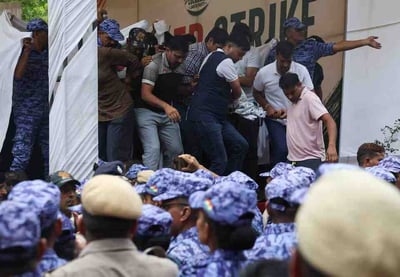
The national capital witnessed a major development on July 18 2026 as the Delhi Police stepped in to shift well known activist Sonam Wangchuk to Safdarjung Hospital. The 59 year old reformer had been staging an indefinite fast at Jantar Mantar since June 28 2026. By the time the police decided to intervene the fast had reached its 21st day taking a huge toll on his physical well being. Medical experts from the hospital reported that while Wangchuk remained stable he had become extremely weak and suffered from acute dehydration due to surviving solely on water and salt for 3 weeks. The extreme humidity and heat of Delhi made his condition deteriorate much faster than during his previous protests in the cooler climate of Ladakh. Hours before the police action his wife Gitanjali J Angmo had visited the protest site to personally request him to end the fast but the determined activist refused to back down.
The core motivation driving this intense protest centers around accountability in the national examination system. Wangchuk and his team from the Cockroach Janta Party launched this agitation to demand the resignation of Union Education Minister Dharmendra Pradhan. The protest gained momentum following structural irregularities and paper leaks in the NEET UG medical entrance examination earlier in the year. The agitators hold the leadership morally responsible for putting the future of millions of students at risk. Even as his physical strength waned Wangchuk remained spiritually resolute telling his followers that he felt weak on the outside but incredibly strong within. He even stated that a peaceful march to the parliament would go ahead as planned to deliver their petitions directly to the democratic authorities.
This situation highlights a deep communication gap between civil society activists and the central government. While the authorities chose to manage the protest as a law and order and medical emergency the actual political demands remained unaddressed. The government has so far chosen to avoid direct dialogue labeling the protest groups as disruptive elements rather than engaging with the underlying issues of exam transparency. By removing the activist from the public square and placing him under medical confinement the administration managed to defuse the immediate threat of a health tragedy at Jantar Mantar. However this approach merely delays addressing the public anger surrounding student exams. A more sustainable response would involve setting up an independent commission to reform the testing process rather than focusing only on managing the protesters.
The hospitalization marks a critical turning point in this month long standoff. It balances the immediate need to protect human life with the democratic right to hold peaceful protests. Medical reports show that Wangchuk requires round the clock observation to recover from the long period of dehydration. The support from opposition leaders and ordinary citizens continues to grow showing that the demand for cleaner educational systems resonates deeply across the country. While the physical fast at Jantar Mantar has been disrupted by police intervention the conversation about national examination reforms is far from over. The incident shows that while administrations can relocate an individual from a protest site the core issues of institutional trust and accountability require systemic fixes rather than security solutions.