
Jawaharlal Nehru University Scholar Neha Bora Defies Police Crackdown To Continue Hunger Strike After Sonam Wangchuk Removal
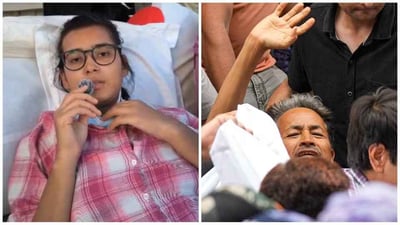
High drama and massive student resistance unfolded at the historic Jantar Mantar protest site in the national capital on July 18 2026. The atmosphere turned chaotic early in the morning when security personnel intervened to dismantle a 3 week long agitation. Neha Bora a prominent PhD scholar from Jawaharlal Nehru University and national president of the All India Students Association completed her 21st day of an indefinite hunger strike. Despite witnessing a major police deployment that resulted in the forced relocation of co activist Sonam Wangchuk to Safdarjung Hospital Bora publicly refused to back down. The young scholar detailed that around 7 am unknown individuals wearing plain clothes infiltrated the main stage area closely followed by heavy police forces who transported Wangchuk away under the guise of urgent medical attention.
The ongoing agitation organized under the banner of the Cockroach Janta Party has intensified into a major national flashpoint regarding the sanctity of competitive examinations. Student leaders including Bora alongside fellow activists Aameen and Manish have been fasting continuously since late June to register their structural dissent. The core demand driving this dangerous hunger strike is the immediate resignation of Union Education Minister Dharmendra Pradhan. The student community holds the leadership morally accountable for the widespread systemic irregularities and paper leaks associated with the NEET UG medical entrance examination earlier in the year. Medical checkups conducted just a day prior revealed that Boras blood sugar levels had plunged to a critically low 49 milligrams per deciliter causing severe medical warnings of potential organ failure from monitoring doctors.
The heavy handed tactics employed by the state apparatus highlight a growing trend where peaceful democratic agitations are treated strictly as public law and order challenges. By deploying personnel in plain clothes and screening the removal of high profile leaders with sheets the administration managed to clear the primary figurehead from the public square while avoiding immediate legal scrutiny. However this operational approach failed to suppress the horizontal leadership structure of the student movement. When security forces attempted to break through the rope boundaries to detain the remaining hunger strikers hundreds of student volunteers formed a massive defensive human chain to shield Bora and her colleagues. This immediate physical resistance prevented further detentions demonstrating that tactical police intervention often strengthens the collective resolve of a movement rather than fracturing it.
The escalation at Jantar Mantar marks a critical moment for the student movement as the scheduled July 20 2026 march to the Parliament approaches. With Cockroach Janta Party founder Abhijeet Dipke launching a fresh fast immediately after the police action the momentum of the protest remains highly volatile. The refusal of the central government to initiate direct dialogue with the fasting scholars creates a dangerous political deadlock that risks the physical lives of young citizens. While the state relies on institutional health mandates and high court advisories to justify its intervention the underlying crisis of student trust in national examinations remains completely unaddressed. The determination of young scholars like Bora shows that administrative security measures are insufficient to silence deep rooted public demands for institutional transparency and political accountability.