
Delhi Voter List Deletions: Supreme Court Tells Citizens Not to Fear Jail as Election Commission Pushes Form 6
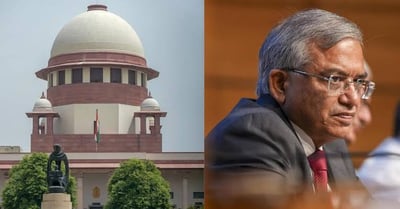
The Supreme Court of India has stepped forward to comfort thousands of worried citizens whose names disappeared from the voter list in the national capital. A special bench led by Chief Justice Surya Kant told ordinary voters that they should not be scared of facing police action or going to jail simply for filling forms to get their voting rights back. The court shared this calming message after citizens and civil rights workers raised alarms over how election authorities are handling the voter list update in Delhi.
The whole trouble started during an official project called the Special Intensive Revision of electoral rolls. Under this massive drive, election workers visited homes across the city to verify addresses and remove fake or inactive entries. However, when the temporary draft list came out, people received a massive shock. Over forty-seven lakh names, which is nearly one third of the entire voting population of the city, had been struck off the roll. The authorities placed these people into a special grouping of voters who were marked as absent, shifted, deceased, or duplicate.
Among the people taken off the list, more than thirty-one lakh were labeled as permanently shifted, while nearly twelve lakh were noted as absent or untraceable. Many of these excluded citizens were regular people who had lived and voted in the city for decades. Some had moved a few streets away because old housing colonies were being broken down and rebuilt into new apartment blocks. Others were simply away working long hours when booth officers visited their houses. Suddenly, these hardworking citizens discovered that their legal right to choose their representatives had vanished.
To fix this massive problem, the Election Commission told all excluded people to fill out a paper called Form 6. But this instruction created widespread panic and deep confusion among voters and legal experts. Under Indian election rules, Form 6 is designed only for brand new voters who are applying for the very first time in their lives, such as teenagers who just turned eighteen. It is not supposed to be used by experienced citizens who have held official voter cards for years.
The fear grew much worse because Form 6 requires a person to sign a legal promise stating that they are not already listed as a voter anywhere else. Under Section 31 of the Representation of the People Act, making a false written statement on a voter form is a serious crime that can send a person to prison for up to one full year. Citizens were terrified that if they signed Form 6 claiming to be new voters when they already had voter identification numbers, police could arrest them for lying to the government. Former election officials also publicly warned that forcing old voters to sign papers made for new applicants was legally wrong.
The issue quickly reached the Supreme Court through petitions filed by civil rights activists Anjali Bhardwaj and Amrita Johri. During hearings, the judges stated clearly that the election body had made an error by forcing existing voters to fill Form 6. The court explained that people who just moved their houses should be given Form 8, which is meant for address changes, while people who were not at home should be allowed to give simple verification slips. The judges told authorities to reach out kindly to excluded families and help them in simple local languages instead of putting heavy legal obstacles in their path.
However, the Election Commission released a fresh public clarification repeating that people missing from the list should still go ahead and submit Form 6. The commission promised that local election officers would not punish or prosecute voters who fill this form, as long as they are not trying to register in two separate towns at the same time. Even with this promise, activists went straight back to the Supreme Court, pointing out that an informal promise from officers cannot protect citizens if the written law still treats an incorrect form as a crime.
Chief Justice Surya Kant listened carefully to these worries and told the public not to be afraid. The Chief Justice assured the petitioners that because the highest court of the land is actively handling the entire issue, no innocent citizen will be punished or put behind bars for trying to restore their vote. The court noted that it understands the heavy pressure on everyday citizens and will make sure the law does not work against honest people who are only trying to protect their democratic rights.
Legal observers note that this case touches the very core of democratic life in India. In a real democracy, every adult citizen must have a simple and safe way to vote without being afraid of legal trouble. When administrative offices create complicated forms and drop lakhs of names from records, poor and working-class families suffer the most because they do not have lawyers to guide them through government paperwork.
The Supreme Court has scheduled further hearings to resolve the matter and ensure that election procedures remain fair and easy for all citizens. For millions of residents across Delhi who are waiting to see their names back on the voting sheet, the top court's firm words offer a big sigh of relief, sending a clear message that regular citizens do not stand alone when facing confusing government rules.