
Kerala University Students Challenge Kerala High Court Order Against Campus Protests in Supreme Court
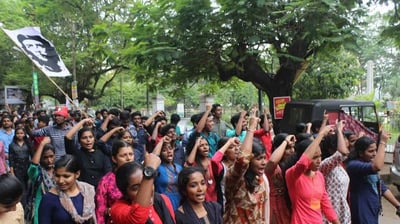
Suspended students from Sree Sankaracharya University of Sanskrit in Ernakulam district have approached the Supreme Court of India to challenge a recent ruling by a division bench of the Kerala High Court. The students filed their plea after the high court canceled an earlier order that had permitted them to sit for their regular semester examinations. The case has triggered a major national debate because the high court judges observed that political actions such as hunger strikes, dharnas, and satyagrahas have no legal place inside educational campuses or within a constitutional democracy.
The legal battle began when the university administration suspended sixteen students following serious campus unrest during a demonstration. Officials alleged that the agitation turned disruptive and interfered with the peaceful functioning of the institution, prompting disciplinary action and an official campus entry ban. Because semester examinations were fast approaching, the suspended students approached a single judge bench of the Kerala High Court seeking immediate relief so they would not lose an entire academic year.
In that initial hearing, a single judge granted the students interim permission to appear for their upcoming examination papers. However, the university administration, its syndicate, and senior officials quickly filed an appeal against the single judge order before a two-judge division bench. The university argued that allowing suspended students to take tests without meeting compulsory attendance requirements or securing proper permissions went completely against established academic regulations.
Taking up the appeal, a division bench comprising Justice Anil K Narendran and Justice Muralee Krishna S ruled in favor of the university and set aside the permission granted by the single judge. In their detailed judgment, the judges stated that colleges and universities exist primarily to give education, not to run political party programs. The bench remarked that political parties and student groups cannot hold educational institutions to ransom, stressing that forms of protest like hunger strikes and dharnas should not be allowed to disrupt the academic rights of regular students.
Facing the immediate loss of their academic term as exams got underway, the students knocked on the doors of the Supreme Court. In their petition before the top court, the students have asked for urgent intervention to restore the single judge's relief so that they can provisionally sit for their remaining examination papers. They have also requested special examination arrangements for any papers they were forced to miss because of the high court's cancellation order.
The petitioners argue that barring them from examinations causes irreversible damage to their education and professional futures. They contend that peacefully raising demands, holding hunger strikes, and conducting non-violent protests are time-honored democratic practices protected under constitutional rights of expression and peaceful assembly. According to the students, broad statements saying such protests have no place in democracy undermine basic civil liberties guaranteed to all Indian citizens, including youth on university campuses.
On the campus ground in Kalady, tension has stayed high among the student body. While examinations began, several students showed their disagreement by wearing black badges into examination halls to stand with their suspended classmates. Some of the suspended candidates continued their peaceful hunger strike outside the university gates, demanding that the authorities take back their disciplinary measures and protect their right to study.
The legal confrontation now rests with the Supreme Court, which agreed to list and hear the students' urgent plea. The upcoming hearing is expected to look closely at whether disciplinary suspensions can be used to stop students from writing tests without a final inquiry conclusion. More importantly, the proceedings will examine whether peaceful methods of protest like hunger strikes can be treated as unlawful disruption within an educational campus in a democratic nation.