
Donald Trump Faces Backlash After Calling Michigan Senate Nominee Abdul El-Sayed A Jihadist And Questioning Loyalty To US: Does Trump Want To Use Hindu Muslim Game In USA ?
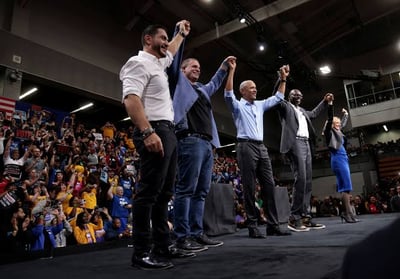
United States political leader Donald Trump has drawn sharp national condemnation after delivering an aggressive verbal attack on Michigan Democratic Senate nominee Abdul El-Sayed during a major campaign rally. Speaking before supporters in Port Huron, Trump leveled severe accusations at El-Sayed, an American physician and former health director for the city of Detroit. Trump characterized the candidate as an extremist who sides with hostile elements and questioned his national loyalty, stating that El-Sayed should be forced to pass through a security metal detector before being allowed inside the United States Senate chamber.
The controversial speech quickly ignited an intense debate across civil rights organizations, political circles, and diaspora communities over the deliberate use of religious identity in American elections. Political analysts and civic monitors pointed out that the strategy mirrors identity-based political polarization observed in other democracies, such as the familiar Hindu-Muslim electoral divide used to mobilize specific voter groups in South Asia. By singling out a minority candidate's religion and casting doubt on his patriotism, critics argue that Trump's rhetoric attempts to create deep cultural friction between religious communities to rally conservative voters ahead of a tight legislative contest.
El-Sayed, who was born and raised in Michigan to immigrant parents, responded directly to the remarks during a campaign appearance in Grand Rapids. His campaign dismissed the attacks as baseless personal smears designed to stoke fear and divert public attention away from pressing domestic priorities like healthcare costs, affordable housing, and wages. Addressing crowds, El-Sayed stated that pointing fingers at someone's name or faith will not hide economic hardships, emphasizing that voters across Michigan want practical solutions to everyday struggles rather than religious and racial division.
The contest in Michigan is widely considered one of the most critical battlegrounds in the country, with the potential to determine the majority balance in the United States Senate. El-Sayed is running against Republican nominee Mike Rogers in a fiercely contested open race. Because Michigan is home to substantial Arab American, Muslim, and diverse immigrant communities alongside major industrial working-class towns, every demographic segment carries enormous electoral weight. If successful, El-Sayed would make history as the first Muslim member elected to the Senate, raising the emotional stakes of the race.
The remarks also drew criticism from within conservative and immigrant coalitions that had previously engaged with the Republican campaign. Civic leaders representing diverse cultural and religious groups warned that introducing sectarian division into public discourse damages the social fabric and risks normalising hostility against minorities. Community representatives emphasized that drawing lines between faith groups to score short-term campaign points sets a dangerous precedent in a pluralistic society built on constitutional freedoms.
As election day draws near, observers note that campaigns are under increasing scrutiny over their messaging. While aggressive identity politics can energize dedicated political bases, moderate and undecided voters frequently express frustration with rhetoric that distracts from substantive governance. Whether such polarizing strategies help or hinder electoral prospects remains a central test for the evolving landscape of American politics.