
Supreme Court Releases Quarterly Digest On Administrative Labour And Service Laws For July To September Covering Vital Employee And Government Rulings
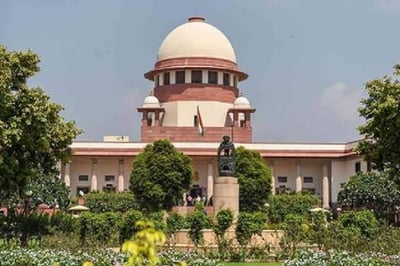
The Supreme Court of India has published its quarterly legal digest consolidating key judicial verdicts delivered across administrative, labour, and service laws for the three-month period spanning July to September. The comprehensive document brings together significant pronouncements from various benches of the apex court, creating an essential single reference point for government departments, private companies, legal practitioners, and working professionals across the country. By organizing complex legal interpretations into a clear, accessible volume, the compilation highlights how the top court is shaping everyday employment relationships, administrative governance, and workplace protections.
Service and labour laws touch the daily lives of millions of public servants, contract staff, and industrial workers. Over the quarterly period, the top court addressed a wide spectrum of disputes, ranging from public recruitment guidelines, departmental inquiries, and seniority lists to retirement benefits, pension eligibility, and wrongful termination claims. The consolidated rulings emphasize that government bodies and public sector employers must act fairly, avoid arbitrary decision-making, and uphold principles of natural justice whenever dealing with employee careers, promotions, and disciplinary penalties.
A major focus of the decisions compiled in the digest relates to fairness in recruitment rules. The apex court reiterated in multiple rulings that recruiting authorities cannot change qualification criteria midway through an ongoing selection process unless service rules explicitly authorize such alterations. The judges noted that altering eligibility benchmarks after examinations have started creates unfair disadvantages for candidates who prepared according to the initial public notification. This consistent judicial position protects job seekers from arbitrary adjustments by recruitment boards across central and state departments.
The quarterly digest also highlights judicial standards regarding departmental disciplinary proceedings and natural justice. The Supreme Court clarified that disciplinary inquiries leading to severe punishments, such as compulsory retirement, dismissal, or reduction in rank, must follow strict evidentiary procedures. Inquiry officers cannot rely on unverified accusations or unshared inquiry materials. The court ruled that employees facing domestic inquiries have a fundamental legal right to inspect all relevant documents and challenge witness statements, ensuring that workplace investigations do not turn into predetermined formalities.
In the realm of labour rights and social security, the judgments reinforce protections for long-serving temporary, casual, and contract workers. The court emphasized that public agencies and municipal corporations should not utilize unfair labour practices, such as repeatedly terminating and re-engaging workers on temporary contracts simply to deny them statutory gratuity, provident fund, and regularisation benefits. The bench underscored that the state must behave as a model employer, balancing administrative efficiency with human dignity and welfare safeguards guaranteed under the Constitution.
Legal researchers, advocates, and human resource managers view quarterly digests as indispensable tools for legal certainty and institutional planning. Because thousands of legal matters are decided by multiple benches every month, tracking individual cases can be challenging for working professionals. The publication of structured digests by legal platforms like LiveLaw enables lawyers, trade unions, and administrative tribunals to cite binding apex court precedents accurately, ensuring that ongoing cases in high courts and lower labour courts follow uniform national legal standards.