
Donald Trump Loses US Congress and Netanyahu Faces Political Deadlock as Iran War Hangs in Balance
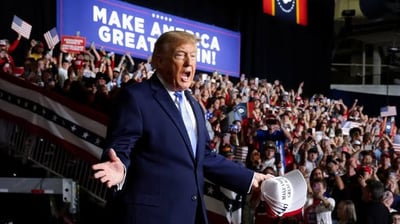
Voters in two major world capitals have delivered a double political shock that could reshape the entire Middle East. In the United States, voters turned out in large numbers and stripped the ruling party of control over the national legislature. Across the ocean in Israel, a closely fought national election ended in a total political stalemate, leaving the government without a clear path to form a working majority. These two surprise election outcomes arrived right in the middle of an unresolved conflict with Iran, leaving world leaders, military planners, and everyday citizens wondering what will happen next to the war effort.
The outcome in the United States represents a dramatic shift in political authority. The rival Democratic Party secured majorities in both the House of Representatives and the Senate, winning hard-fought races across key battleground territories. When the new lawmakers take their seats, the opposition will hold the gavel and control the committees that oversee the executive branch. This means the American leader can no longer expect automatic approval for his policies. Lawmakers who oppose long foreign military actions will now hold the power to examine official decisions, demand testimony from generals, and scrutinize every dollar spent on overseas operations.
A major reason why American voters pushed back at the ballot box was economic distress in their own daily lives. While top economic figures showed business activity continuing, regular families struggled to deal with higher bills at grocery stores, rising rental costs, and elevated petrol prices at local fuel stations. Many working-class families felt that national leaders were spending too much attention and too much money on military conflicts abroad while ignoring practical household troubles at home. Voters remembered promises about avoiding foreign entanglements, and their frustration showed up clearly on voting day.
At the exact same time, a parallel political drama was unfolding in Jerusalem. Israeli citizens went to the polling booths, but the outcome failed to produce an outright winner. The ruling party led by Benjamin Netanyahu emerged as the largest single group by taking twenty-seven seats in the national parliament, but that was far short of the sixty-one seats needed to establish a stable ruling coalition. Rival factions, led by former defense officials and newly energized community alliances, took large blocks of seats as well. The arithmetic of the parliament became completely tangled, leaving neither side with a simple path to govern.
This parliamentary tie leaves Netanyahu in a deeply uncomfortable position as a caretaker prime minister. Without a dependable majority behind him, his political survival requires painful compromises with rival parties that hold completely different visions for the country. Opposition figures have openly argued that the election result proves the public lacks confidence in the current direction of the government. They have demanded a change in leadership, while government loyalists argue that changing leaders during an active regional security crisis would invite unnecessary danger. The political uncertainty inside the country makes any bold military decision far more difficult to sustain.
The biggest question mark created by these twin elections hangs over the ongoing conflict with Iran. Over past months, military exchanges, airstrikes, and drone attacks have shaken the wider region, creating serious damage and casualties on multiple sides. Naval blockades and attacks around critical maritime trade passages, such as the Strait of Hormuz, caused major shocks to global oil shipping. Tankers had to divert course, insurance fees for sea cargo skyrocketed, and energy prices climbed across the planet. Both Washington and Jerusalem had maintained an aggressive military posture, but the domestic political foundations supporting that posture have suddenly cracked.
In Tehran, political leaders and state officials watched the election results with obvious satisfaction. The speaker of the Iranian parliament openly declared that voters in the West had rejected endless conflict, claiming the vote was a public refusal to support further foreign military campaigns. Iranian officials signaled that they view the political setbacks in Washington and Tel Aviv as signs of weakness. They warned that if foreign governments continue to apply military force instead of respecting the public will for peace, they will only encounter tougher resistance and deeper complications across the region.
The loss of the national legislature fundamentally changes how the American government can finance foreign warfare. Under the American constitution, the president holds supreme command over armed forces in the field, but only Congress has the constitutional power of the purse. The incoming majority leadership has made it clear that unlimited funding for overseas combat will face fierce resistance. Lawmakers can delay emergency defense spending packages, attach strict conditions to weapons deliveries, and summon top defense officials for televised public questioning, creating massive political hurdles for any prolonged campaign.
The American president, however, still retains significant executive authority and has made clear he will not give up his power easily. In public remarks following the vote, the president insisted that the results were not a direct judgment on his leadership and warned that any extreme measures sent by lawmakers would be met with immediate presidential vetoes. At the same time, senior officials within the administration have hinted at the possibility of a negotiated settlement. With the threat of legislative gridlock looming, diplomacy may suddenly look like a far more attractive exit route than an open-ended military confrontation.
The personal and political partnership between Donald Trump and Benjamin Netanyahu will also face its toughest test yet. For years, the two leaders coordinated their strategic moves closely, presenting a united front against regional adversaries. Today, both men find themselves politically bruised and fighting for domestic control within their own systems. Instead of planning sweeping regional maneuvers with total freedom, each leader must spend precious time and energy managing domestic rivals, legal disputes, and divided cabinets. When political leaders lose solid backing at home, their ability to act boldly abroad naturally shrinks.
The real-world consequences of this political deadlock extend far beyond the corridors of government. For hundreds of millions of everyday citizens worldwide, the unresolved confrontation has meant higher electricity bills, expensive cooking fuel, and persistent economic worry. Developing countries that rely on imported crude oil have suffered severe pressure on their foreign currency reserves. Ordinary families living near the conflict zone in the Middle East face even harsher realities, dealing with physical displacement, destroyed property, and constant fears of sudden rocket attacks disrupting their lives.
These dramatic election results have not stopped the military confrontation, but they have fundamentally altered the rules of the game. Neither the American president nor the Israeli prime minister can afford to ignore the growing domestic resistance to a costly and dangerous foreign war. Over the coming weeks, both leaders must decide whether to seek an off-ramp through diplomatic negotiations or double down on military pressure to quiet their critics. The road ahead remains unpredictable, but one truth is undeniable: the ballot box has forced the architects of the conflict to pause and confront the heavy political cost of war.