
Donald Trump Weighs New Iran Strikes As White House Signals Regional Military Escalation
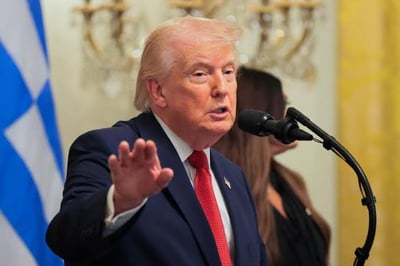
Tensions across West Asia have reached a critical tipping point following explicit warnings from Washington regarding impending military action against Tehran. On August 1, 2026, White House officials signaled that President Donald Trump is actively evaluating severe new military strikes against Iranian infrastructure. Speaking during a high-level Cabinet meeting at the Camp David presidential retreat in Maryland, the American President expressed growing frustration with the diplomatic process, stating openly that he is losing faith in Iranian leadership. White House Press Secretary Karoline Leavitt confirmed that a recent memorandum of understanding regarding a bilateral truce collapsed after Tehran allegedly violated key commitments, targeted international commercial vessels, and launched attacks toward regional locations hosting American forces. The administration emphasized that military action remains fully on the table to compel Iranian authorities to return to meaningful negotiations.
The escalation comes on the heels of dramatic physical clashes across critical maritime and air corridors throughout the Middle East. On July 31, 2026, Iran military forces launched multiple drone attacks toward facilities in Kuwait hosting American personnel, while Kuwaiti defense forces intercepted several unmanned aerial vehicles inside their airspace. Simultaneously, the Islamic Revolutionary Guard Corps claimed responsibility for hitting multiple commercial oil tankers attempting to navigate through the strategic Strait of Hormuz, causing severe disruptions to global maritime traffic and sending shockwaves through international energy markets. These aggressive developments followed earlier missile strikes aimed at American bases located in Jordan, proving that the temporary ceasefire arrangement reached between both nations in recent weeks has completely unraveled into direct confrontation.
Military planners and intelligence sources report that joint coordination between Washington and Tel Aviv has intensified significantly over the past 24 hours. Strategic options under consideration involve an extensive air campaign designed to target primary Iranian energy grids, key power plants, and strategic transport infrastructure. President Donald Trump reiterated his firm stance by declaring that American forces intend to strike heavy targets until Iranian leadership realizes it can no longer sustain the confrontation. Despite the hardline military signaling, top American diplomatic envoys, including Steve Witkoff, Jared Kushner, Vice President JD Vance, and Secretary of State Marco Rubio, remain engaged in direct communication channels with Iranian officials. This dual track strategy combines maximum economic and military pressure with an underlying invitation for diplomatic concession.
The potential broadening of this conflict carries profound economic and geopolitical consequences for the global economy. By threatening essential power plants and maritime supply routes near the Persian Gulf, the ongoing standoff directly imperils a significant portion of the world crude oil supply. Furthermore, Washington linked the intense pressure on Iran to broader regional shifts, claiming that reduced regional support from Tehran helped push Hamas toward accepting a potential disarmament agreement in Gaza. However, the military brinkmanship also risks dragging neighboring Gulf nations deeper into a protracted regional war, particularly as Iranian officials warn that any major direct assault on their domestic energy infrastructure will trigger immediate retaliatory strikes against American energy assets throughout the wider Middle East.
This high-stakes policy highlights the inherent vulnerabilities of relying on coercive military threats to force lasting political compromises. While massive air strikes can temporarily cripple strategic facilities and project overwhelming strength, they rarely resolve deep underlying geopolitical friction without sustained, trustworthy dialogue. As long as mutual trust remains shattered and both sides trade heavy military blows along vital international waterways, the risk of a miscalculation plunging the region into an uncontrolled wider conflict grows higher each day. The coming days will determine whether diplomatic channels can successfully defuse the situation before military action transforms the current standoff into a full scale regional war.