
Russia Ukraine War Escalates As Ballistic Missile Attacks On Kyiv And Regional Strikes Cause Rising Casualties
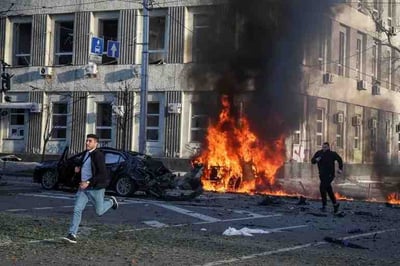
A devastating wave of long range aerial bombardment has struck residential and commercial neighborhoods in Kyiv, leaving multiple civilians dead and dozens injured. On August 1, 2026, Russian military forces launched a concentrated ballistic missile assault directly targeting five distinct administrative districts within the Ukrainian capital. Emergency response teams rushed to disaster sites in Darnytskyi and Solomianskyi after heavy explosions tore through multi story apartment blocks and suburban infrastructure. State Emergency Services confirmed that at least 9 people lost their lives during the overnight assault, while 27 residents, including 4 young children, sustained serious injuries requiring immediate hospitalization. Search and rescue crews worked tirelessly through the morning to extinguish intense residential fires and extract 35 trapped survivors from shattered housing units, while local sirens echoed across the metropolitan center warning of secondary air raids.
The deadly barrage on the capital forms part of a broader, accelerating cycle of military exchanges extending deep into both territories. In the hours preceding the strikes on Kyiv, Ukrainian defense networks reported widespread drone and artillery fire directed at critical supply points in eastern regional hubs. Concurrently, cross border drone attacks targeted key commercial and logistical assets inside Russian borders, including a massive logistical warehouse in Volgograd that burst into flames following a late night aerial strike. Both sides continue to report steady military and civilian casualties as air defense batteries engage incoming threats over urban centers. According to recent disclosures from international monitoring groups, long range strike capacity has surged dramatically on both sides, transforming populated civilian zones and industrial nodes into daily battlegrounds.
This sharp escalation in direct, large scale strikes reflects a tactical shift aimed at eroding opponent endurance and strategic infrastructure. By launching concentrated ballistic attacks against major administrative and residential hubs, offensive operations aim to strain civilian defense systems, divert military resources, and create widespread public pressure. On the other hand, long range retaliatory strikes targeting transport links, fuel depositories, and commercial supply bases attempt to disrupt the frontline supply chain and signal an ability to inflict economic damage deep inside foreign territory. However, this heavy reliance on long distance aerial bombardment demonstrates the persistent operational deadlock on the ground, where neither side has achieved a decisive physical breakthrough despite devastating human and material costs.
As emergency crews clear rubble across Kyiv and regional centers assess damage to municipal power grids, the human cost of the continuing confrontation grows heavier each day. For thousands of displaced families navigating burnt out homes and damaged neighborhood streets, daily life remains defined by constant uncertainty and loss. While defense strategists calibrate missile stockpiles and plan future tactical maneuvers, the growing toll on innocent civilians highlights the extreme danger of sustained attrition warfare across heavily populated urban regions. Without a meaningful diplomatic opening or a shift in battlefield dynamics, local populations on both sides face an increasingly dangerous future as long range strikes continue unabated.