
E85 Fuel Launched In Delhi At Rupees 82.12 Per Litre As India Enters The Flex Fuel Era But Will Indian Cars Be Specially Designed To Face Eighty Five Percent Ethanol
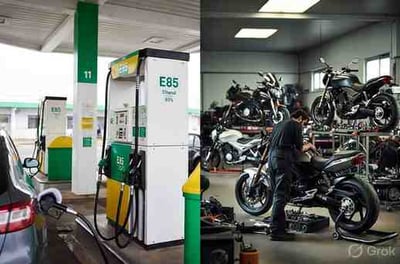
India has taken a monumental step toward sustainable mobility with the official commercial launch of E85 fuel in the national capital of Delhi. Inaugurated by Union Petroleum and Natural Gas Minister Hardeep Singh Puri at an Indian Oil Corporation retail outlet on Pusa Road, the high ethanol blend has been introduced at a compelling price of rupees 82.12 per litre. This initial rollout across select public sector stations marks the concrete beginning of the flex fuel movement in the country. Composed of eighty five percent domestically produced ethanol and fifteen percent conventional petrol, E85 is specifically designed for specialized flex fuel vehicles. By pricing it exactly rupees twenty cheaper than the standard E20 petrol currently retailing at over rupees one hundred two per litre, the government is deliberately creating a strong financial incentive to encourage consumers to transition away from traditional fossil fuels. However, this massive infrastructure push brings an immediate engineering concern to the forefront as consumers and experts openly ask if mass market Indian cars are truly ready and robustly designed to face such a high concentration of alcohol without mechanical failure.
The core of the issue lies in the chemical composition of ethanol itself, which is highly corrosive and moisture absorbent compared to pure fossil fuels. Running a vehicle on an eighty five percent ethanol blend is completely impossible for standard production cars currently dominating Indian roads, as the fuel can rapidly degrade regular rubber hoses, corrode aluminum components, and damage vital fuel injectors. To safely handle this alternative fuel, automotive manufacturers must completely overhaul internal engine architectures. Engineering teams are forced to introduce hardened valve seats, modify engine management system calibrations, install specialized fuel line coatings, and deploy advanced corrosion resistant sensors. While the government has set an ambitious expansion roadmap aiming for five thousand operational E85 stations within the next couple of years, the manufacturing sector is racing against time to prove that mass produced passenger vehicles can handle the long term chemical stress of high blend biofuels under extreme Indian driving conditions.
At this current moment, the selection of vehicles capable of running on E85 in the domestic market remains exceptionally small, leaving a wide gap between fuel availability and actual consumer adoption. In the mass commuter two wheeler segment, Hero MotoCorp has led the charge by introducing flex fuel versions of its popular Splendor Plus and HF Deluxe models, alongside Suzuki showcasing its Gixxer SF two hundred fifty flex fuel motorcycle. On the passenger car side, Maruti Suzuki has repeatedly showcased its upcoming WagonR Flex Fuel prototype, which represents India’s very first high ethanol compliant passenger hatchback. Other major manufacturers like Tata Motors and Toyota have committed to developing compliant power plants, but commercial showrooms remain empty of private flex fuel cars today. This vehicle shortage forces initial fuel stations to operate with virtually zero utilization, raising valid questions about whether the industry can scale up production fast enough to justify the rapid deployment of specialized dispensers across major metropolitan corridors.
Beyond the immediate engineering hurdles, a deeper look reveals a critical economic trade off regarding real world fuel efficiency that everyday motorists must carefully calculate. Ethanol inherently possesses about one third less energy density compared to pure petrol, meaning engines operating on high ethanol blends require a significantly larger volume of fuel to cover the exact same distance. Industry experts calculate that flex fuel vehicles running on E85 will experience a sharp drop in mileage ranging between twenty five to thirty five percent. Consequently, the attractive rupees twenty discount per litre at the pump is not pure financial savings, but rather a calculated fiscal cushion designed by policymakers to offset the expected drop in fuel economy. Ultimately, the true success of this green shift will depend entirely on how consistently the government can maintain this wide price advantage at the dispenser and how securely automotive engineers can design vehicles to withstand the harsh realities of eighty five percent ethanol.