
E85 Fuel Launched in Delhi But Will Cane Sugar Cultivation Requiring 2500 Litres of Water Per Kilogram Trigger a Severe Water Crisis
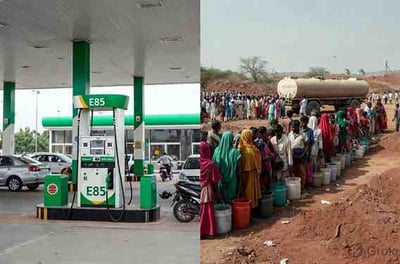
India has officially entered a new energy chapter with the commercial launch of E85 fuel in the national capital of Delhi. Inaugurated by Union Petroleum and Natural Gas Minister Hardeep Singh Puri at an Indian Oil Corporation retail outlet on Pusa Road, the high ethanol blend has been introduced at a compelling price of rupees 82.12 per litre. This initial rollout across select public sector stations marks the concrete beginning of the flex fuel movement in the country. Composed of eighty five percent domestically produced ethanol and fifteen percent conventional petrol, E85 is specifically designed for specialized flex fuel vehicles. By pricing it exactly rupees twenty cheaper than standard petrol, the government is creating a strong financial incentive to drive the transition away from fossil fuels. However, this massive infrastructure push brings an immediate environmental warning to the forefront as experts openly question the sustainability of fueling cars with sugarcane, an incredibly thirsty crop that demands between fifteen hundred to seventeen hundred eighty litres of water globally per kilogram, and can exceed twenty five hundred litres per kilogram in highly irrigated regions like Maharashtra.
The aggressive push for ethanol production could inadvertently destroy India's fragile hydrological balance by completely draining its already depleted groundwater reserves. Sugarcane is inherently a water guzzling crop, and using it as the primary feedstock for green biofuel means diverting massive volumes of fresh water from agriculture and human consumption straight into vehicle fuel tanks. Critics argue that this strategy swaps an oil import dependency for an catastrophic domestic water deficit. In highly irrigated sugarcane belts, extensive tube well pumping has already caused water tables to drop to dangerously low levels. If millions of hectares of land are aggressively pushed into sugarcane cultivation to meet the enormous ethanol blending targets, the country risks drying up its vital aquifers. This systemic diversion of life sustaining water resources to support the transport sector threatens to transform agricultural lands into ecological dust bowls, proving that the current biofuel policy could carry an unacceptably high environmental price tag.
This impending biofuel driven drain comes at a time when major Indian states like Madhya Pradesh, Rajasthan, Uttar Pradesh, Maharashtra, and several others are already battling acute, historical water scarcity. In Rajasthan, vast arid stretches leave rural communities traveling miles for a single pot of drinking water, while groundwater tables in Madhya Pradesh and Uttar Pradesh continue to plummet due to erratic monsoons and over extraction. Maharashtra routinely witnesses severe seasonal droughts where entire villages must rely on emergency water tankers to survive. Introducing a highly aggressive ethanol mandate that relies heavily on sugarcane farming will inevitably intensify the fierce competition for water between resource heavy commercial cash crops and thirsty local populations. When major agricultural states are already facing severe water stress, expanding a crop that requires up to twenty five hundred litres of water for just one single kilogram threatens to collapse regional water management systems entirely.
From an objective policy perspective, the true success of India's green energy shift must be evaluated by looking at both the fuel dispenser and the natural environment. While reducing foreign crude oil bills by billions of dollars is a vital macroeconomic goal, achieving it by escalating a domestic ecological crisis is fundamentally unsustainable. Beyond the engineering challenge of making sure mass market Indian passenger vehicles are designed to withstand the corrosive nature of eighty five percent ethanol, the government faces the much larger task of balancing energy security with water security. Without a major policy shift toward less thirsty, non food alternative feedstocks like agricultural waste, broken grains, or cellulosic biomass, the aggressive drive for sugarcane based E85 fuel could push vulnerable states deeper into environmental distress, showing that an unrefined rush for green energy can inadvertently trigger a historic drinking water emergency.