
Fake Iran Nuclear Claim From Indian Social Media Account Triggers Diplomatic Shockwaves Across Tel Aviv And Washington
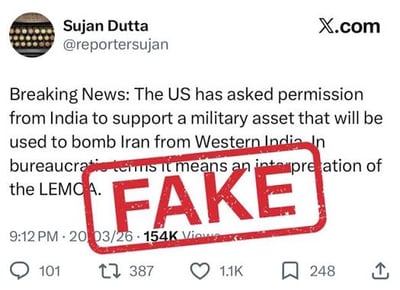
The long-standing military and diplomatic relationships in the Middle East faced an unexpected disruption after an unverified social media claim originated from an anonymous digital account based in India. The fabricated narrative quickly bypassed international vetting protocols, ultimately finding its way into official state addresses and sparking deep frustration within high-level policy teams across Washington and Tel Aviv. The incident underscored how rapidly unverified digital posts paired with artificial intelligence visuals can alter sensitive geopolitical discussions.
The sequence of events began when an online handle operating out of India posted a statement falsely attributed to Brigadier General Ahmad Vahidi, a senior commander within the Islamic Revolutionary Guard Corps of Iran. The post claimed that Vahidi had explicitly admitted Tehran would never abandon its pursuit of nuclear weapons as long as rival nations maintained their capabilities. To maximize digital reach, the statement was published alongside an artificial intelligence generated graphic depicting a nuclear detonation. Despite obvious grammatical errors and a complete absence of official verification, the post gained tens of thousands of impressions before being translated into regional languages and reshared across multiple platforms.
The misinformation rapidly crossed international borders when high-profile accounts amplified the message. An independent account named Mossad Commentary, which operates without official ties to Israeli intelligence, shared the quote to argue that diplomatic efforts were being undermined. Within half an hour, an Israeli television news network broadcast the fabricated statement in English, characterizing it as a major public admission by Iranian leadership regarding nuclear capabilities.
The situation escalated further when the unverified claim reached senior political figures. During a high-profile public address at Mount Herzl in Jerusalem, Israeli Prime Minister Benjamin Netanyahu cited the statement directly, presenting it as concrete evidence of regional security threats. Simultaneously, media commentators and political figures in the United States amplified the quote across national broadcasts, framing it as proof of diplomatic duplicity shortly before independent fact-checking organizations verified that no such statement was ever made.
The spread of the fake report generated significant anger among advisers in both the United States and Israel. Members of Donald Trump's policy team expressed intense frustration that an unverified rumor originating from an anonymous user in India managed to penetrate formal speechwriting channels and disrupt delicate strategic negotiations. The breach exposed vulnerabilities in state vetting procedures, illustrating how modern disinformation can bypass traditional intelligence channels and impact international relations.