
Farmers Blocked At Punjab Haryana Border During March To Delhi Over Proposed India US Trade Pact
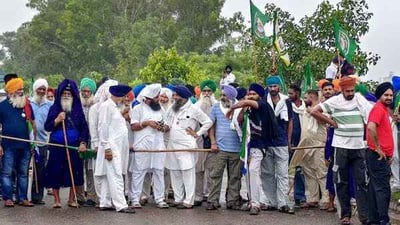
Early in the morning on 21 July 2026, the high highway connecting Punjab and Haryana turned into a sea of tractor trolleys, colorful flags, and determined faces. Thousands of growers from villages across Punjab packed their basic essentials, water containers, and mats into trucks to begin their long drive towards the national capital. Organized under the banner of the Desh Bachao Morcha along with over 550 local unions, these agricultural workers were heading to Kisan Ghat in Delhi for a massive rally. Their goal was simple yet urgent: to raise their voice against the ongoing free trade negotiations between India and the United States. However, as the massive convoy reached the Shambhu boundary near Ambala, they were greeted by heavy iron barricades, concrete blocks, and multiple rows of police forces. The sudden shutdown of the interstate border brought traffic to a complete standstill, stranding ordinary commuters and leaving long queues of farm vehicles stretched along the highway for over 10 kilometers.
The deep concern bringing these small and marginal cultivators out onto the tarmac stems from fears over cheap agricultural imports entering domestic markets. Although official negotiations between negotiators from New Delhi and Washington remain active and unsigned, farm leaders argue that opening trade doors to American produce could spell financial ruin for rural families. In the United States, agricultural operations receive billions of dollars in government subsidies and run on industrial scales spanning thousands of acres. By contrast, nearly 85 percent of growers in India operate on small plots of land under 2 hectares. If import tariffs on items like soybeans, corn, cotton, apples, almonds, and dairy goods are removed or reduced, domestic prices could plunge rapidly. Protesting unions warn that local families, who already face rising seed prices, irregular climate patterns, and heavy debt loads, simply cannot compete on price with heavily subsidized foreign imports.
Security measures across the region were tightened rapidly throughout the morning. Police teams placed concrete barriers at key points including Khanauri, Bastara, and the main Shambhu crossing, while prohibitory orders under Section 163 of the Bharatiya Nyaya Sanhita were enforced in several districts of Haryana. Tension spiked further when prominent union leaders, including Gurnam Singh Charuni, were detained on National Highway 152D near Pehowa while traveling to join the demonstration. In response, angry union members organized sudden sit-in protests at local toll plazas, temporarily halting vehicular movement on the Hisar-Chandigarh road. Union leaders like Sarwan Singh Pandher publicly criticized the heavy police presence, stating that peaceful citizens have a fundamental democratic right to travel to the capital and voice their grievances to elected representatives.
On the other hand, representatives from the central administration have repeatedly sought to calm these growing fears, clarifying that national agricultural interests will remain fully protected in any foreign deal. Speaking after a top-level meeting on 21 July 2026, senior ministers stated that the Prime Minister has personally assured that sensitive farm products are kept outside the scope of trade concessions. Government negotiators maintain that India will not rush into signing any bilateral trade pact unless it offers balanced, equal advantages and respects clear red lines surrounding rural livelihoods. Official statements emphasize that the welfare of local producers remains the top priority during all international commercial talks.
Looking at the broader situation, this conflict highlights a recurring structural trust gap between policymaking bodies and rural communities. While international trade pacts aim to boost industrial exports, digital technology, and service sectors, rural households feel vulnerable whenever agriculture enters foreign discussions. Even when official assurances are given, farm unions prefer visible legal protections and open public documents over verbal promises. The intense standoff at the border shows how sensitive trade choices can trigger widespread public anxiety if rural populations feel left out of the dialogue. Finding a path forward will require transparent consultations between international trade architects and the very people who work the land to ensure national progress does not come at the cost of domestic rural security.
As the sun set over the Shambhu border, hundreds of tractor engines remained parked along the paved road, with farmers camping directly on the highway as evening approached. Community kitchens, known as langars, were quickly set up on the roadside to distribute hot meals, water, and tea to both protesters and stranded travelers. While police forces maintained a strict watch behind concrete walls, union representatives held peaceful open-air meetings to plan their next course of action. The determination seen along the border makes it clear that until formal guarantees and transparent draft terms are shared publicly, rural communities will continue to stand their ground to safeguard their future livelihoods.