
Why Is PM Silent Rahul Gandhi Meets Students Injured During CJP March In New Delhi Why Is PM Silent Rahul Gandhi Meets Students Injured During CJP March In New Delhi
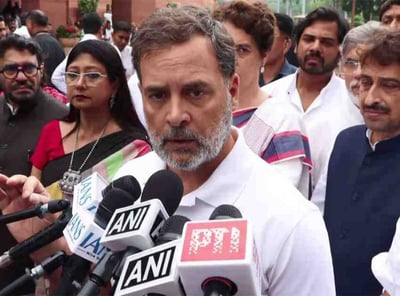
A major political escalation swept through the national capital on July 21 2026 as Leader of Opposition Rahul Gandhi directly confronted the central government over the administrative handling of student demonstrations. Accompanied by senior Congress leaders Priyanka Gandhi Vadra and KC Venugopal, Rahul Gandhi visited Ram Manohar Lohia RML Hospital in New Delhi to meet young activists injured during a high-profile police lathicharge. The student march, organized under the banner of the Cockroach Janta Party CJP on July 20 2026, saw thousands of youth attempting to march toward Parliament demanding systemic education reforms, accountability for competitive exam paper leaks, and the immediate resignation of Union Education Minister Dharmendra Pradhan. The confrontation turned severe when security forces deployed tear gas canisters and batons to stop the procession near Jantar Mantar, leaving dozens of young protesters hospitalized with severe injuries.
Stepping outside the hospital complex after speaking with bedridden aspirants, Rahul Gandhi launched a direct attack on the ruling administration. Questioning the silence of top government leadership, Gandhi openly asked why Prime Minister Narendra Modi had failed to offer an apology or issue a statement regarding the heavy-handed force used against unarmed youth. Terming the police action completely un-Indian, the Leader of Opposition argued that young boys and girls walking the streets of the capital were not criminals, but regular citizens exercising their constitutional right to demand a fair examination system. He further highlighted that while 152 paper leak instances have impacted nearly 7.5 crore students across the country in recent years, no major perpetrators have faced strict conviction, whereas struggling candidates asking for transparency are met with police batons.
The confrontation rapidly spilled into parliamentary proceedings as opposition parties organized joint protests outside Lok Kalyan Marg and requested an urgent debate inside the Lok Sabha. Opposition figures including Congress President Mallikarjun Kharge and Samajwadi Party chief Akhilesh Yadav condemned the crackdown, alleging that administrative power was being deployed to suppress legitimate dissent. Meanwhile, Union Health Minister JP Nadda visited hospitalized students to assess medical care arrangements and held discussions with a 2 member delegation of CJP representatives. The government maintained that police restrictions were necessary to prevent large crowds from breaching high security zones around Parliament, emphasizing that official channels remain open for constructive discussion on examination reforms.
Evaluating the broader situation, the ongoing faceoff points to a critical trust deficit between political institutions and the country's youth demographic. Beyond immediate political rhetoric, the repeated failure of national competitive examinations creates intense economic and emotional stress for millions of families. While maintaining public order around legislative complexes is a mandatory security duty, using physical force against non-violent student gatherings frequently backfires, turning administrative issues into nationwide political flashpoints. Resolving the crisis will require the government to move past defensive measures, fix operational vulnerabilities in national testing agencies, and establish transparent dialogue platforms so that young citizens do not feel compelled to risk their safety on the streets.