
France Protests Flare as Thousands March in Paris: Critics Ask Why Emmanuel Macron Is Unable to Solve Problems of French People
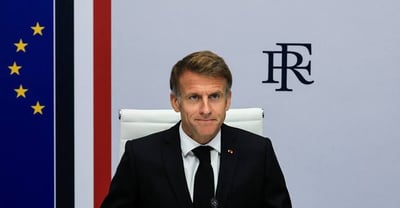
A sea of people filled the wide avenues of Paris, waving blue, white, and red flags while chanting slogans that bounced off historic stone buildings. From young students worried about their future careers to elderly pensioners counting every coin at the grocery store, citizens walked shoulder to shoulder to express deep frustration. What began as an early morning gathering quickly turned into one of the largest public mobilizations the capital has seen in recent months. The atmosphere grew tense as riot police formed long lines near public squares, carrying shields and tear gas canisters to block marching crowds from government buildings.
The wave of anger was not limited to the capital city alone. Similar protest marches sprang up in Lyon, Marseille, Toulouse, and smaller towns across the French countryside. People carried homemade cardboard signs complaining about low salaries, rising grocery prices, and public services that feel broken. By the late afternoon, tensions boiled over in several street corners, leading to clashes between small groups of demonstrators and security forces. Police officers detained one hundred and thirty-five people in France as officers tried to clear main roads and disperse crowds with water cannons and tear gas.
Similar unrest began echoing beyond French borders into other parts of the continent. Italian police raided houses in Milan linked to political activists, while thousands of people also staged street protests in Spain and Albania. Across southern and western Europe, regular working families are feeling squeezed by the same heavy economic pressures. Yet the spotlight remains brightest on France, where public demonstrations have become a regular feature of everyday life and a constant headache for the government in Paris.
The central question being asked on the streets and inside television studios is why Emmanuel Macron seems completely unable to solve the deep problems of the French people. When he first took office as a young and energetic leader, he promised to make France modern, wealthy, and united. He presented himself as a fresh voice who belonged neither to the traditional left nor to the traditional right. Today, after years in power, many voters feel those promises were never kept. Instead of bringing citizens together, his time in office has been marked by repeated waves of nationwide anger, street battles, and public strikes.
A major reason for this failure is the common belief that the president is out of touch with regular working families. From the very beginning of his leadership, critics gave him the nickname of the president of the rich. While his administration cut certain taxes for wealthy investors and big corporations, ordinary workers watched their monthly utility bills, fuel prices, and supermarket receipts climb higher. When working mothers and factory employees struggle to buy basic groceries at the end of the month, government speeches about economic growth sound empty and uncaring. This growing divide between the political rulers in Paris and ordinary towns has created deep distrust.
Another big problem is Macron's stubborn governing style. Rather than listening carefully to trade unions, community leaders, and local mayors, the president has repeatedly pushed controversial laws through parliament without broad agreement. The forced changes to the national pension system, which made people work longer before retirement, left millions feeling ignored and betrayed. By using special executive powers to bypass lawmakers, the government sent a clear message that public opposition would not change its course. This top down method has blocked peaceful political debate and left citizens feeling that taking to the street is the only way their voices can be heard.
The troubles facing France are also tied to the rapid decay of public services that citizens used to take pride in. Across the country, people complain that public hospitals have long waiting lines, emergency rooms are understaffed, and schools lack enough teachers. Trains are often delayed or canceled, and police stations in small towns have been closed. French taxpayers pay some of the highest taxes in the developed world, so when they see their schools and hospitals crumbling, they naturally demand answers. The government has struggled to fix these basic public systems, leading people to believe their tax money is being wasted.
The political system surrounding the president has also become fractured and weak. Following recent parliamentary battles, the ruling government lost its firm majority in the National Assembly. This means the president can no longer easily pass major reforms or satisfy different political groups. Lawmakers from the left accuse him of destroying social protections, while politicians from the right accuse him of being soft on law and order. Caught between these competing forces, the administration appears frozen, unable to introduce fresh policies that actually improve daily living conditions.
For the ordinary person on the street, this political deadlock translates into daily exhaustion. A retired worker marching near Place de la Bastille explained that his monthly pension no longer covers the cost of heating his small apartment during cold weeks. A young nurse standing nearby shared that her hospital shifts are so long and stressful that many of her co-workers have simply quit. These are not political theorists arguing about ideology; these are ordinary citizens who feel that life is becoming harder by the month and that their leader does not understand their pain.
As evening fell on October 24, 2026, cleanup crews began sweeping broken glass and extinguished flare remnants from the streets of Paris. The 135 people arrested were taken to police stations for questioning, but the anger that brought thousands out of their homes remains completely unresolved. Until the leadership in Paris stops relying on police batons and starts directly addressing low wages, high costs, and broken public trust, the cycle of protests is certain to continue. The question of whether Emmanuel Macron can ever truly fix the problems of the French people may already have an answer in the noisy, crowded streets outside his palace doors.