
Serbia Elections Massive Rally Sees 150000 People Demand Political Change As Major Protest Across The World From India To France To Nepal To Bangladesh Shows Why Young Generations Are Fed Up
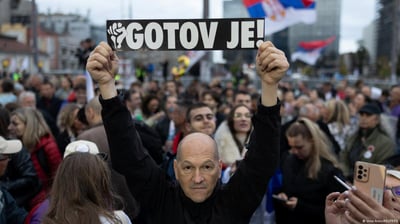
A massive human sea took over the wide avenues of Belgrade as nearly one hundred and fifty thousand citizens marched in unified defiance against the political establishment. University students, school teachers, factory workers, and everyday families marched side by side, blowing whistles, waving banners, and shouting slogans calling for an immediate end to years of autocratic governance. The gathering in the Serbian capital marked one of the largest public rallies seen in the region in decades. What began as a local student outcry has now turned into a powerful nationwide movement determined to reshape the future of the country.
The immediate trigger for the massive public anger in Serbia traces back to an infrastructure disaster that citizens believe was caused by official negligence and corruption. The collapse of a concrete railway station roof in the city of Novi Sad claimed sixteen innocent lives, breaking the patience of ordinary people who had grown exhausted from crumbling public services. Rather than accepting official excuses, young university students stood up to demand truth, transparency, and accountability. Over time, their street marches expanded into an organized political platform putting forward independent candidates for all parliamentary seats to challenge longtime leader Aleksandar Vucic.
The scenes unfolding in Belgrade are far from an isolated incident, reflecting major protest movements across the world from India to France to Nepal to Bangladesh where citizens take to the streets. In Bangladesh, courageous student groups pushed aside long-standing political dynasties to demand fair job opportunities and real democracy. In France, young workers and college learners regularly shut down transport networks and gather in city squares to oppose painful pension cuts, high living costs, and police heavy-handedness. In Nepal, young crowds have repeatedly clashed with authorities over unemployment, bureaucratic corruption, and government bans on digital communication tools. In India, educated young men and women continue to rally over exam paper leaks, job shortages, and institutional corruption, demanding fairness for their hard work.
Looking closely at these global unrests makes it easy to understand why young generations are fed up and losing faith in traditional politics. Modern youth have grown up watching their parents work long hours only to face rising inflation, impossible housing rents, and low wages. Despite spending years earning college degrees and gaining professional skills, millions of young people find that decent jobs are scarce or handed out through family connections and political favoritism. When economic hardship is combined with politicians who refuse to listen, the feeling of quiet hopelessness quickly turns into open rebellion on public streets.
The role of rapid digital communication has fundamentally changed how these protests form and sustain themselves. Unlike previous generations that depended on state-controlled television and print newspapers, today young people talk directly to each other across mobile apps and social channels. When students in Belgrade see youth standing firm in Dhaka or Paris, they realize their personal struggles are part of a universal fight for dignity. Digital platforms allow ordinary people to organize marches, collect emergency medical supplies, and share real-time updates without relying on established political party machines.
Protest participants in Serbia made it clear that their anger is rooted in daily survival and democratic rights. University professors, young graduates, and elderly grandparents who joined the demonstration pointed out that basic freedoms have been steadily undermined. Bogdan Pavkovic, a young demonstrator who took part in the march, explained that people are tired of living inside an unfair system that spies on citizens, manipulates elections, and attacks honest critics. He stressed that younger citizens want a normal economy, quality education, and clean public institutions that build a peaceful and stable society.
The demonstration came just days ahead of crucial parliamentary elections, scheduled for 25 October 2026, creating the biggest political test for Aleksandar Vucic since his party came to power fourteen years earlier. In response to the massive street mobilization, the ruling leadership attempted to label the young organizers as foreign-funded agents trying to destabilize the state. However, that familiar government defense failed to stop thousands of ordinary citizens from joining the student rallies, showing that public fear of authority has given way to a shared determination to fix the nation.
The broader lesson emerging from Serbia and worldwide street movements is that ignoring the voices of youth carries dangerous consequences for political systems. Young people represent the largest share of the workforce and the future of every society, yet their concerns regarding climate change, fair wages, transparent governance, and human rights are routinely brushed aside by aging leaders. When traditional democratic channels fail to provide real solutions, the street becomes the only remaining classroom where young citizens can demand real accountability.
As the large crowds in Belgrade slowly dispersed into surrounding streets after singing songs and reading from the country constitution, the message left behind was unmistakable. Whether in Eastern Europe, South Asia, or Western democracies, the patience of young generations has worn thin. Governments everywhere are learning that empty campaign slogans cannot quiet a generation fighting for basic human rights, honest leadership, and an equal chance to build a secure life.