
German Ministers Pledge Tough Action After Rioters Damage Stores In Frankfurt Demonstrations Over Living Costs And Education
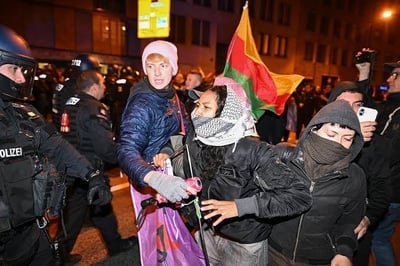
The financial capital of Germany woke up to broken glass, burned barricades, and heavy police patrols following a night of intense street unrest across central Frankfurt. What began as a peaceful nationwide protest quickly turned into violent disorder as groups of rioters targeted luxury shopping avenues, bank branches, and commercial retail outlets. Senior government ministers in Berlin came forward on Sunday, November 1, 2026, to condemn the destruction, promising swift and uncompromising legal punishment for individuals involved in attacking public order. The violence has shocked the public and placed rising economic frustrations squarely at the top of national debate.
The street gatherings started during the daytime when tens of thousands of demonstrators marched through dozens of German cities to raise urgent voices regarding deteriorating economic realities. Organized by youth groups, university student federations, and labor alliances, the rallies called on the federal government to reduce soaring household living costs, control rent spikes, and invest heavily in the public schooling system. While peaceful crowds marched through Berlin, Hamburg, Munich, and Cologne without incident, Frankfurt became the epicenter of serious violence as the sun began to set over the financial district.
Trouble began when smaller, masked groups separated from the main peaceful assembly near the central pedestrian zones. Dressed in dark clothing and covering their faces, aggressive factions threw stones, glass bottles, and powerful fireworks directly at police formations stationed outside public buildings. Rioters used iron bars and paving stones pulled from sidewalks to smash through the front glass windows of department stores, electronics shops, and high-end fashion boutiques along famous commercial streets. Several retail shops were entered and looted before special anti-riot units could push the crowds back using water cannons and tear gas canisters.
Emergency services and local fire rescue teams worked through the night to put out multiple street fires lit by the rioters. Piles of trash containers, wooden construction boards, and shared electric scooters were dragged into road intersections and set on fire to block police vehicles from entering narrow neighborhood lanes. City transport authorities were forced to halt underground subway and tram lines connecting to the central shopping areas, leaving thousands of regular weekend commuters stranded across outer suburbs. Hospital emergency rooms treated dozens of injured individuals, including police personnel who sustained burns, cuts, and fractures during the sudden street confrontations.
Addressing reporters on Sunday evening, German Federal Interior Minister Nancy Faeser declared that violent vandalism will not be tolerated under any circumstances. She stated that while the constitutional right to hold peaceful demonstrations is a sacred pillar of democracy, turning that freedom into a license to loot stores, destroy private property, and hurt police officers is criminal behavior. The interior minister confirmed that federal investigators are working closely with state police units in Hesse to analyze hundreds of hours of surveillance footage, social media video clips, and drone footage to identify every individual who participated in the riots.
Justice officials reiterated that the state will use the full force of the law against those arrested during the night. Prosecutors have already initiated formal criminal investigations covering charges of serious breach of public peace, assault on law enforcement officers, extensive property damage, and aggravated burglary. Judicial spokespersons emphasized that individuals found guilty of participating in organized street violence will face immediate trial procedures and could receive significant prison sentences rather than simple administrative fines.
The outbreak of rioting has drawn mixed reactions from community organizers and student leaders who planned the original demonstrations. Protest spokespersons expressed deep frustration that the genuine message of ordinary families was completely hijacked by small groups intent on causing chaos. Labor representatives noted that millions of working people across Germany are genuinely struggling to balance family budgets due to high electricity rates, expensive grocery bills, and underfunded schools. They emphasized that legitimate public demands for better social security must not be discredited because of the destructive actions of fringe rioters.
Local shop owners and business associations in Frankfurt expressed profound shock over the heavy physical damage inflicted on their stores. Retail owners spent the morning sweeping up broken window glass, boarding up shattered entrance doors with plywood, and taking stock of stolen merchandise. The regional trade association noted that retail businesses are already dealing with high inflation and weak consumer spending, making the cost of repairing vandalized storefronts a devastating financial blow. Business owners called on municipal authorities to provide increased continuous police presence across shopping districts to prevent copycat unrest in coming weeks.
Sociologists and political commentators pointed out that the unrest in Frankfurt reflects a deeper social friction simmering across European urban centers. Years of high inflation, rising interest rates, and public spending cuts have widened the gap between the prosperous financial sector and struggling lower-income households. When tens of thousands of young people see their future opportunities shrinking and basic necessities becoming unaffordable, peaceful social movements can easily become fertile ground for disruptive elements seeking violent confrontation with state authorities.
As street sanitation crews cleared the remaining debris from Frankfurt avenues, the city slowly returned to a tense calm. Police patrols remained on high alert around key government buildings, train stations, and shopping plazas to deter further disruptions. The events of the weekend have sent an unmistakable signal to leaders in Berlin: while tough law enforcement is essential to safeguard public peace, the government must also find meaningful solutions to address the deep economic anxieties that brought thousands of ordinary citizens out onto the streets in the first place.