
Oleshky Evacuees Reunited In Ukraine After 1711 Days Following Melania Trump Brokered Humanitarian Ceasefire Deal
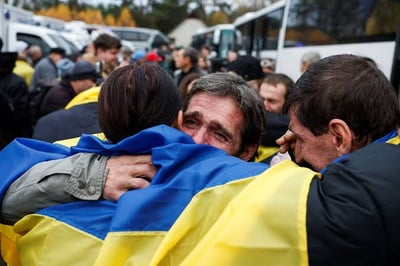
Tearful embraces, tight hugs, and cries of relief filled the air along the northern crossing point as Ukrainian families came together again after years of painful separation. For one waiting husband named Dmytro, the long count finally ended as he stood watching the road with fixed eyes. He had not seen his wife Larisa for 1,711 days, keeping track of every single sunrise since the start of the conflict. When the white passenger bus arrived and Larisa stepped down onto the tarmac, Dmytro wrapped his arms around her fragile frame. Her physical weight had dropped by a third due to prolonged hunger, yet her blue eyes shone brightly as she held her husband hands and declared that she was waiting for peace and safety to return to the entire nation.
The emotional return became possible through a temporary humanitarian pause agreed between warring parties and coordinated under the leadership of United States First Lady Melania Trump. Operating under a special agreement between Ukrainian and Russian representatives, the ceasefire established a safe travel window to bring out hundreds of vulnerable civilians from Oleshky, a southern Ukrainian town located across the Dnipro River in the Kherson region. The rare breakthrough in diplomatic cooperation allowed twenty-five buses and several medical ambulances to enter the conflict zone and transport residents who had been cut off from the world for nearly five years.
The people who returned had survived unimaginable hardships inside the occupied town. Following the catastrophic collapse of the nearby Kakhovka dam, deep floodwaters submerged large parts of Oleshky, killing hundreds of residents and washing away local homes. Over recent months, the situation turned into a severe struggle for daily survival as food supplies and medicines ran out completely. Evacuees shared how they survived without electricity, heating, or piped gas, often searching for wild weeds, grass, and leftover jars of pickled vegetables left behind in abandoned apartments. One returning woman recalled that she had not tasted a single slice of bread in over twelve months, staying alive solely on small patches of cucumbers and tomatoes grown in her backyard.
Among those who stepped off the transport buses was Mykhailo, a father who had stayed behind in Oleshky to guard his family home while his wife Zhanna and two young daughters escaped early in the fighting. For three long years, the family remained separated by military frontlines. His wife described him as a hardworking man who built a simple brick stove to cook meals, kept a few chickens alive, and worked the soil to survive the winter without power or fuel. As soon as the bus pulled to a stop at the transfer station, Mykhailo spotted his daughters standing in the crowd, running forward to wrap them in his arms as three years of loneliness dissolved into tears of joy.
The journey back home was long, complex, and full of anxiety for the returning civilians. Because active military fighting made crossing the Dnipro River directly into Ukrainian-held territory impossible, the evacuation convoy had to take an indirect route. The buses traveled east into southern Russian territory toward the town of Anapa. From there, the evacuees boarded special flights taking them to Gomel in Belarus, before finally boarding road transport that brought them across the northern border back onto Ukrainian soil. As the long line of buses entered Ukrainian roads, hundreds of local citizens lined the roadsides for miles, waving blue and yellow flags to welcome their countrymen back from captivity.
At regional hospital centers, medical staff stood ready to provide urgent emergency care to dozens of returning citizens. Many elderly residents arrived on stretchers, suffering from recent strokes, chronic illnesses, and deep physical exhaustion after months without basic medicines. Doctors and nurses worked tirelessly through the night to provide hot food, fresh fluids, and clean clothing to the frail arrivals. The director of the medical center noted that everyone on the medical staff volunteered eagerly to care for the returning citizens, stating that helping human beings recover from such intense suffering was the highest duty of any caregiver.
Human rights officials from both sides confirmed that the entire evacuation took place smoothly without any security breaches along the designated travel corridor. Russian human rights ombudsman Yana Lantratova remarked that the mutual operation demonstrated a high standard of cooperation, adding that she and her Ukrainian counterpart had submitted an appeal to the US First Lady requesting regular humanitarian corridors of this nature. Ukrainian human rights commissioners also described the effort as a valuable example of how neutral diplomatic coordination can save vulnerable civilian lives even during active military hostilities.
While hundreds chose to board the rescue buses and return to free territory, local reports confirmed that some residents opted to stay behind in Oleshky to look after elderly relatives or protect their property, despite knowing that the ceasefire window was ending. A smaller group of residents chose to relocate further into Russian territories. Humanitarian workers pointed out that the complex choices faced by ordinary people show the deep trauma that military occupation forces onto regular families who find their towns turned into war zones overnight.
International observers and diplomatic experts noted that the successful completion of this mission highlights the power of quiet humanitarian diplomacy. In a war marked by deep bitterness and broken communications, finding common ground to rescue starving children, women, and the elderly proves that life-saving agreements remain possible. United Nations agencies and international aid groups have urged international leaders to build on this rare success and establish permanent humanitarian corridors across all occupied zones.
As night settled over the reception centers in Ukraine, families sat together drinking hot tea, sharing quiet stories, and holding hands tightly as if afraid to let go. For hundreds of people who lived through hunger, dark basements, and endless fear, the nightmare of the past 1,711 days has finally given way to safety and warmth. While the wider conflict continues along the frontlines, the reunion of separated parents, children, and spouses stands as a powerful testament to human resilience and the unbreakable bond of family.