
Gyanesh Kumar Removal Will Trigger Modi Govt Exit Claims CJP Founder Abhijeet Dipke While Demanding CEC Resignation
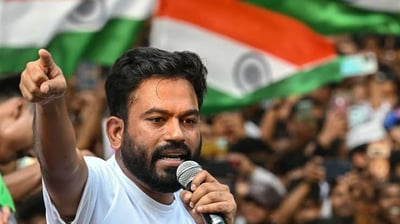
Political activist and CJP founder Abhijeet Dipke has predicted that the Modi government will lose power in the next general elections, arguing that the exit of Chief Election Commissioner Gyanesh Kumar is necessary to guarantee free and fair polls in the country. Addressing a large gathering at a public rally in Kochi, Dipke asserted that government changes in a democracy must happen through the ballot box, but insisted that the electoral process cannot inspire public trust as long as the current leadership heads the Election Commission. His remarks have added fresh fuel to an ongoing national controversy surrounding election conduct and civil liberties.
Speaking to a packed audience of students, youth representatives, and socio-cultural activists at Rajendra Maidan, Dipke directly linked the political future of Prime Minister Narendra Modi to the position of the Chief Election Commissioner. He stated to the crowd that if Gyanesh Kumar goes, Narendra Modi will also go, urging citizens to get ready for political change. The crowd cheered loudly as he questioned why the ruling administration was going to extreme lengths to protect a single senior bureaucrat rather than addressing legitimate concerns raised by ordinary voters and opposition parties.
Dipke alleged that the central government has unleashed state machinery against young demonstrators simply because they are demanding transparency in election procedures. He claimed that authorities were treating questioning citizens like enemies of the state, asking why the administration was waging a confrontation against its own youth just to safeguard one official. He stressed that an election commission must remain visibly independent and neutral, rather than appearing aligned with the interests of the ruling establishment.
Recalling his recent detention in New Delhi alongside other youth leaders, Dipke spoke about being arrested near Jantar Mantar while carrying the national flag. He told the gathering that being placed behind bars for raising the Tricolour reminded him of colonial methods used under British rule. He stated firmly that no amount of police intimidation would stop him or his associates from holding the Indian flag high across every state, whether in Delhi, Maharashtra, Tamil Nadu, or Kerala.
The activist also mounted a wider critique of government policies, arguing that personal freedoms in the country are facing increasing restrictions. He alleged that the administration has steadily moved to dictate what citizens eat, whom they choose to marry, and now how they cast their votes during elections. He expressed serious apprehension over ongoing voter verification exercises, claiming they could be misused to influence election results and disenfranchise vulnerable sections of society.
Drawing historical comparisons, Dipke reminded the audience of the foundational principles that shaped modern India. He emphasized that the country was built on the enduring ideals of Mahatma Gandhi, Babasaheb Ambedkar, and Jawaharlal Nehru. Describing Gandhi as the soul of the nation, Ambedkar as its moral backbone, and Nehru as its forward-looking mind, he stated that no sitting prime minister, regardless of how long they remain in office, could ever become bigger than the founding leaders who gave India its democratic constitution.
Dipke also touched upon the state of free speech and dissent, arguing that democratic tolerance was significantly higher during the leadership of former Prime Minister Manmohan Singh. He pointed out that people were previously permitted to criticize the head of government openly without facing severe anti-terror laws or arbitrary police crackdowns. He argued that true democracy requires an environment where leaders can be held accountable by ordinary citizens without fear of retaliation.
The rally in Kochi witnessed active participation from several prominent figures, including actor Prakash Raj, who earlier led a long protest march from Marine Drive to the meeting venue. Protesters carried placards, raised national flags, and organized cultural performances highlighting democratic rights and constitutional protection. The peaceful assembly reflected growing coordination among youth groups seeking comprehensive electoral reforms.
The strong statements made by Dipke have triggered sharp debate across the political spectrum. While supporters of the ruling party have dismissed the accusations as baseless political rhetoric aimed at discrediting constitutional bodies, civil rights advocates and opposition members maintain that institutional accountability and electoral transparency remain vital for safeguarding democratic governance.