
Rahul Gandhi Debate With Modi Offer Stands As Tharoor Challenges BJP Over Vote Chor Row And Gyanesh Kumar SIR Controversy
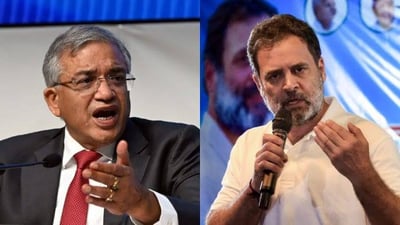
Senior Congress leader Shashi Tharoor has renewed the political challenge against the ruling establishment by declaring that Rahul Gandhi offer to engage in an open public debate with Prime Minister Narendra Modi remains active and ready to take place. The strong statement comes during an intense national argument over how voter lists are being prepared, cleaned, and updated across Indian states. The opposition has repeatedly used the phrase vote chor to describe what they call a calculated operation to delete millions of poor, working class, and minority citizens from official voter rolls. Speaking to reporters, Tharoor insisted that the ruling party cannot hide behind procedural excuses, emphasizing that the Leader of the Opposition is completely prepared to face government leaders on any open public platform.
The controversy gained high momentum following fiery public speeches delivered by Rahul Gandhi, where he openly accused the central government of working closely with election authorities to weaken democratic safeguards. The Congress leader has argued that election victories are being engineered in advance by quietly striking legitimate citizens off voting registers. In his public addresses, Rahul Gandhi placed direct personal responsibility on Chief Election Commissioner Gyanesh Kumar, accusing the leadership of the poll panel of conducting an unfair operation that favors the ruling party. By using the direct term vote chor, the opposition aims to take the complex issue of voter registration straight to everyday citizens, framing the ongoing roll revisions as an outright theft of the most fundamental constitutional right possessed by the common people.
At the very center of the nationwide debate lies the Special Intensive Revision, known widely as the SIR exercise. Under this process, election officers and local booth level staff are tasked with cleaning up electoral rolls by tracking down duplicate names, deceased persons, and voters who have shifted residences. However, opposition leaders and civil liberty groups argue that the exercise is being implemented through harsh and impossible paperwork demands. Shashi Tharoor highlighted that the names of nearly thirteen crore citizens, representing around fifteen percent of the adult voting population, are at serious risk of being excluded from final voting registers. He pointed out that India has conducted free and transparent elections for nearly eight decades without needing sudden, widespread voter roll purges that target the most vulnerable sections of society.
The ruling party has pushed back aggressively against these accusations, launching strong personal counterattacks against the opposition leadership. Union Home Minister Amit Shah challenged Rahul Gandhi and other opposition figures to bring their complaints inside Parliament rather than making noisy claims on the street. Addressing a political gathering, the Home Minister asserted that the ruling alliance won clear democratic mandates because the public trusts their governance. Shah accused opposition leaders of acting like poor sportsmen who blame the cricket umpire whenever they face an electoral defeat. He maintained that the central government has nothing to hide and remains fully willing to hold a special discussion on the floor of the House if the opposition possesses genuine facts and logic.
Other senior government figures also joined the offensive, rejecting the idea of holding debates outside formal constitutional institutions. Union Finance Minister Nirmala Sitharaman stated that Parliament is the established and appropriate forum for serious national debates, reminding Rahul Gandhi that he holds a responsible constitutional post as the Leader of the Opposition in the Lok Sabha. Meanwhile, BJP spokespersons mocked the opposition public protests and mock parliamentary sessions as empty political drama. Defending the work of the Election Commission, the ruling party explained that booth workers visit homes multiple times to verify living addresses, and names are marked for removal only when individuals are confirmed to be absent, deceased, or permanently relocated.
Shashi Tharoor dismissed the government arguments, clarifying that the opposition will not allow the ruling leadership to choose convenient excuses to avoid public scrutiny. The Thiruvananthapuram lawmaker explained that discussing election integrity inside Parliament is vital, but having an open, direct, and unscripted debate with Prime Minister Narendra Modi in front of the entire country is equally necessary when public trust in basic institutions is shaken. He noted that Rahul Gandhi had offered to debate the Prime Minister or any senior government minister on multiple occasions, and that offer has not expired. According to Tharoor, a confident administration with a clean record should welcome the opportunity to sit face to face with its chief political opponent and explain its policies to every household watching on television.
Opposition strategists continue to raise specific instances of what they describe as digital voter manipulation on the ground. Rahul Gandhi previously presented data from assembly areas where thousands of Form 7 applications were submitted within just a few days to request the deletion of names from local rolls. Congress leaders claim that computer software is being deployed in a centralized manner to strike off voters belonging to scheduled castes, backward groups, and minority communities because these demographic groups traditionally vote against the ruling party. These detailed allegations have turned Chief Election Commissioner Gyanesh Kumar into the central focus of opposition attacks, with several parties demanding his resignation and calling for an independent judicial investigation into how digital electoral records are managed.
The escalating political war over voter lists has brought major opposition parties together under the joint banner of the INDIA alliance. Massive rallies and protest marches have been organized in the national capital, bringing together leaders like Mallikarjun Kharge, Akhilesh Yadav, Tejashwi Yadav, and regional chief ministers. These parties have warned that if the right to vote is weakened through administrative tricks, the entire foundation of Indian democracy will collapse. Student unions, independent youth groups, and legal activists have also joined the movement, connecting the anger over voter roll deletions with broader daily issues such as rising unemployment, paper leaks in government recruitment exams, and growing living costs.
As winter approaches and political parties prepare for upcoming state assembly contests, the dispute over voter rolls shows no sign of cooling down. The demand by Shashi Tharoor for an open debate puts the ruling alliance in a position where it must balance its aggressive public campaign with formal procedural answers. For everyday citizens who simply want their local polling slip to arrive without trouble on voting day, the high level confrontation highlights a critical question. Whether inside the halls of Parliament or in a live broadcast debate, the Indian public is watching closely to see if their political leaders will provide clear, honest answers on how the sanctity of every single vote is being protected.