
Honorary Doctorate Conferred On Devendra Fadnavis At Rebranded Adani University Sparks Scrutiny Over Growing Nexus Between State Power And Corporate Academia
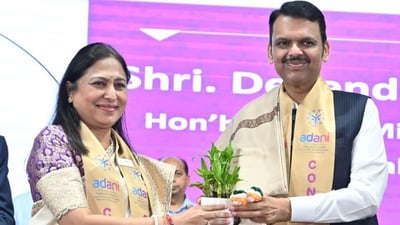
The lines between state governance and corporate power blurred further in Maharashtra as Chief Minister Devendra Fadnavis received an honorary Doctor of Letters degree from the recently renamed Adani Institute of Higher Education and Research in Wardha. Presiding over the seventeenth annual convocation was Dr Priti Adani, functioning in her capacity as University Chancellor and Chairperson of the Adani Foundation. While university convocations traditionally celebrate academic scholarship and rigorous research, the sight of an active head of government accepting a ceremonial doctorate from the leadership of a private conglomerate that holds extensive, multi-crore infrastructure, port, and energy contracts across the state has sparked immediate political controversy and ethical debate.
The timing and venue of the ceremony made the political optics impossible to ignore. The event marked the very first convocation held by the institution since it shed its long-standing identity as the Datta Meghe Institute of Higher Education and Research to adopt the corporate name of the Adani Group. Opposition leaders and governance watchdogs pointed out that while private conglomerates are free to expand into higher education, senior constitutional functionaries should maintain strict ethical distance to avoid conflicts of interest. Accepting academic awards from a corporate family that frequently bids for state government clearances, subsidies, and urban development projects creates a troubling visual that undermines public faith in neutral administration.
Fadnavis himself seemed to acknowledge the disconnect during his address to the graduating batch. Speaking before hundreds of students who had spent years writing dissertations and defending research papers, the Chief Minister remarked in a lighter vein: when I look at all these PhD holders, I thank God I did not have to do all the hard work they did to earn the PhD. While intended as humorous self-deprecation, critics noted that the remark unintentionally laid bare how easily political figures bypass the intellectual labor expected of regular citizens to receive identical titles from corporate-managed institutions.
The Chief Minister went on to advise the graduating doctors and engineers that true success is not measured by the size of one's bank account, but by how much one gives back to society. The lecture on selflessness delivered from an Adani-branded dais drew sarcastic pushback across social and political forums. Opposition functionaries remarked on the irony of corporate and political elites preaching financial modesty to young professionals entering an economy burdened by private college fees, high student loan burdens, and sluggish wage growth.
Beyond the podium speeches, the event highlighted the rapid consolidation of private conglomerates across sectors once dominated by public or philanthropic trusts. Across Maharashtra and wider India, major business houses have steadily expanded their footprints from ports, coal mines, and power grids into hospitals, media networks, and premier educational universities. When corporate giants acquire educational institutions and immediately use their ceremonial platforms to felicitate the very politicians who regulate their businesses, academic autonomy is inevitably compromised.
Educational experts and civil society activists voiced concern that higher education is increasingly functioning as a soft-power tool for corporate public relations. Bestowing honorary doctorates upon sitting ministers allows business houses to cultivate close political goodwill, generate friendly publicity, and shield themselves from tough public scrutiny. The conferral in Wardha serves as a potent reminder of how corporate capital and state authority continue to reinforce each other, leaving everyday citizens and hard-working students to wonder whether meritocracy still holds value in an era dominated by corporate-political alliances.