
NLSIU Bengaluru Convocation Boycott Sees 105 Law Students Skip Event Over Invitation To Chief Justice Of India Surya Kant
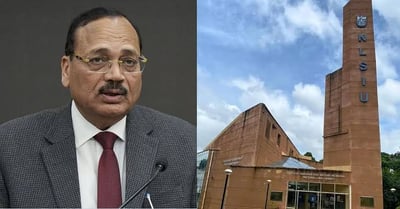
A major controversy has hit India's premier legal education institution as more than one hundred graduating students decided to boycott their own graduation day ceremony. The silent and peaceful protest unfolded during the annual convocation of the National Law School of India University, located in Bengaluru. Instead of walking across the stage in black robes to receive their hard-earned law degrees in front of senior judges, one hundred and five students chose to stay completely away from the ceremony hall. Their collective decision to skip the milestone event was taken to register strong public opposition against the university decision to invite the Chief Justice of India, Justice Surya Kant, as the chief guest for the occasion.
For any young student who enters law school, the final convocation ceremony is normally the proudest moment of their academic life. It is the special day when years of reading thick law books, writing research papers, arguing mock court trials, and preparing for late-night examinations finally come to a close. Parents and family members often travel long distances from across the nation to sit in the audience and watch their children step onto the stage to receive their degrees. Choosing to walk away from such an important family milestone is never an easy choice, which reveals the depth of feeling and strong moral stand taken by the graduating class.
The event itself faced intense friction long before the microphones were switched on inside the auditorium. During the academic year 2026, when university administrators first announced that Chief Justice of India Surya Kant had been invited to address the gathering and hand out certificates, a strong wave of objection swept across the campus community. Both current final-year students and former graduates joined hands to circulate a formal petition calling upon university management to reconsider the invitation. The petition gathered widespread support, highlighting serious concerns regarding judicial decisions, constitutional values, and the moral independence that legal scholars expect from the highest court in the land.
The pushback from the student community became so sharp that the university administration initially took the rare step of temporarily cancelling the entire convocation event. Halting an annual university convocation is an extremely unusual measure in Indian higher education, particularly for an elite center like the National Law School of India University, which is recognized across the world as a cradle of top legal talent. However, university authorities later reversed course and decided to go ahead with the event anyway, organizing the function inside the Jnana Jyoti auditorium under watchful eyes and tight event management.
When the ceremonial music played and the official procession entered the auditorium, the empty chairs among the student rows told the real story of the day. Out of the entire graduating batch, one hundred and five young men and women had officially declined to attend the gathering. While some of their classmates chose to attend and collect their gold medals and certificates, the large group of absent students made sure their collective absence delivered an unmistakable message. They demonstrated that future lawyers and constitutional defenders were willing to sacrifice personal honors to stand up for their principles and voice dissent against the leadership of the judicial system.
Inside the legal community, this student action has sparked rich discussion and debate. Several senior advocates and legal professors pointed out that the National Law School was established specifically to train independent thinkers who question authority rather than bow down to powerful public figures. Throughout Indian legal history, great lawyers have earned respect by standing up against injustice and defending constitutional guarantees without fear. From this perspective, many legal thinkers viewed the boycott not as an act of disrespect, but as a genuine exercise of democratic conscience by young adults entering the legal profession.
At the same time, traditional voices inside legal circles voiced discomfort over the protest. Some senior commentators argued that the office of the Chief Justice of India represents the supreme judicial authority of the country and deserves institutional respect, regardless of personal disagreements over specific court judgments. These observers suggested that graduating students could have attended the formal event to uphold academic decorum, using external seminars, research journals, or public debates to express their professional disagreements with judicial rulings.
The controversy also brings attention to a growing divide between traditional judicial culture and the younger generation of legal scholars. Across law campuses in India, students are paying closer attention than ever to how court benches handle fundamental rights, personal liberties, executive actions, and freedom of expression. When judicial decisions appear to fall short of constitutional ideals, young students are no longer willing to remain quiet spectators. The internet and social communication channels have enabled students to organize quickly, write shared manifestos, and hold public figures accountable in ways that previous generations could rarely imagine.
University administrators found themselves caught in a difficult position throughout the episode. Educational leaders have a duty to maintain good relations with constitutional offices and the judiciary, as senior judges frequently act as chancellors, visitors, and advisors to national law academies. Balancing that administrative duty against the genuine democratic rights of their own students proved to be a delicate challenge. While the university managed to complete the formal ceremony at the Jnana Jyoti auditorium, the shadow of the large-scale student boycott remained the dominant headline across national education news.
For the one hundred and five students who chose to stay outside the auditorium doors, their degrees will eventually arrive by mail or through administrative counters. They missed the ceremonial applause, the photo opportunities, and the ceremonial handshakes. Yet, as many of their supporters noted, they walked away with a shared sense of moral integrity. By taking a clear public stand on their very last day on campus, these young graduates showed that their education in justice was not just words printed on paper, but a living commitment to constitutional truth.
The boycott at the Bengaluru law university will likely be remembered for years as a defining moment in modern Indian legal education. It demonstrates that universities are not just places where students collect papers to secure jobs, but vibrant democratic spaces where critical thinking thrives. As these young lawyers enter courts, legal firms, human rights organizations, and policy centers, their willingness to speak truth to power suggests that the future of constitutional defense in India remains alive, energetic, and unafraid to challenge convention.