
Houthi Fighters Launch Ground Incursions Into Saudi Arabia Border Posts In Sharp Escalation
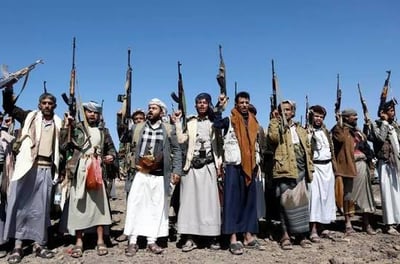
Houthi fighters have begun physical cross-border ground incursions into Saudi Arabian territory, shifting their military strategy from distant missile launches to direct combat on land. Armed groups crossed through rugged, mountainous frontier regions in the southwest, targeting isolated security checkpoints and taking control of border posts. This sudden push across national boundaries marks a dramatic turn in regional security, bringing ground warfare right to the doorsteps of the kingdom after months of long-range standoff attacks.
For several months, the conflict had largely unfolded in the sky and across open sea routes. The Yemeni group relied heavily on explosive drones and ballistic rockets aimed at cities, military runways, and coastal energy installations, while also targeting international cargo ships in the Red Sea. However, intelligence reports and battlefield surveillance reveal that fighter units are now actively crossing the boundary on foot and in light vehicles, taking advantage of steep mountain ridges and gaps in border fences to strike military installations directly.
During these small-scale raids, attacking units managed to temporarily overpower remote outpost guards and seize military hardware. Security assessments indicate that the fighters captured specialized small arms and equipment specifically assigned to border patrol units. By capturing these forward positions, the group has demonstrated that it retains the capacity to carry out organized ground operations on sovereign Saudi soil, challenging assumptions that the kingdom’s advanced surveillance grid had completely sealed off the border.
The sudden resumption of ground incursions highlights the collapse of quiet diplomatic efforts that had kept border lines relatively stable over the past two years. Back-channel talks between regional leaders had previously created an informal understanding that limited direct frontier clashes, offering hope that a lasting settlement could be reached. That fragile understanding unravelled rapidly as wider Middle Eastern confrontations flared, prompting the group to abandon restraint and revive offensive operations along the physical border.
The geography of the border country plays a decisive role in making these ground assaults possible. The southwestern frontier between Yemen and Saudi Arabia runs across jagged mountain ranges, deep rocky valleys, and harsh terrain that makes continuous patrol operations extremely difficult. Local fighter groups have spent generations navigating these narrow mountain passes without heavy machinery. Using small, fast-moving squads, they can slip past electronic sensors and thermal cameras in bad weather or darkness, strike a forward post, and withdraw into protective rock formations before heavy air support can arrive.
This shift to physical cross-border attacks carries major strategic risks for the wider region. When missiles or drones are fired, air defense systems like Patriot interceptors can often destroy them high in the sky before they strike major population centers. Ground raids, by contrast, present a different kind of danger. They expose frontline troops to close-range combat, threaten surrounding border villages, and create immediate pressure on military commanders to deploy heavy infantry and ground armor back into difficult frontier areas.
The escalation also creates significant anxiety across international energy markets. Saudi Arabia remains the world’s leading exporter of crude oil, and several vital pipeline networks, storage terminals, and distribution centers sit within range of the southwestern border. Any sign that ground fighting could spread deeper toward energy transport hubs or industrial zones raises the risk of oil supply disruptions, which quickly pushes up international fuel prices and increases shipping insurance rates across the globe.
In response to the growing ground threat, military authorities in the kingdom have placed defense units along the southern command on high alert. Additional air reconnaissance flights, combat helicopters, and specialized counter-guerrilla forces have been dispatched to reinforce threatened border sectors. Saudi forces have simultaneously launched targeted air strikes against assembly camps, storage caves, and transport routes on the other side of the boundary to stop further groups from gathering for incursions.
For ordinary people living in southern border towns, the return of ground fighting brings back memories of past conflicts that disrupted local schools, businesses, and farming communities. While daily life in major cities like Riyadh and Jeddah continues under heavy air defense protection, border communities now face the immediate reality of sirens, military convoys, and artillery exchanges near their doorsteps. Local authorities have cautioned residents to stay clear of restricted military buffer zones until security is restored.
The physical incursions represent a serious test for peace efforts across the Middle East. With ground troops engaging at close quarters, the possibility of a swift de-escalation becomes much slimmer. Unless international mediators can revive dialogue and establish a workable security arrangement along the frontier, the renewed ground fighting risks pulling both sides back into an exhausting, long-term war with unpredictable consequences for regional security.