
Houthis claim to hit Saudi Arabia with missiles as US ends 13 night run of Iran strikes
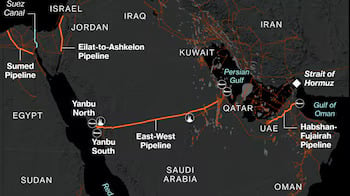
Tensions across the Middle East escalated dramatically on 25 July 2026 when Yemen based Houthi rebels announced that they had launched a coordinated barrage of ballistic missiles and drones targeting Saudi Arabia. Military spokesperson Brigadier General Yahya Saree confirmed in a pre recorded statement that the rebel forces specifically targeted energy facilities belonging to Aramco in the Red Sea coastal cities of Yanbu and Jizan. Emergency sirens sounded multiple times across both Saudi cities early in the morning as civil defense authorities warned residents of potential danger. The missile launch marked a swift retaliation after the Saudi led coalition carried out overnight airstrikes targeting military assets in the Houthi controlled port city of Hodeida and nearby Kamaran island on 24 July 2026. The strikes in Hodeida resulted in at least 2 people injured and damaged local communications infrastructure, sparking fresh fears of a wider regional confrontation.
This sudden outbreak of direct hostilities between Houthi fighters and Saudi Arabia represents a dangerous expansion of an already complex regional conflict. Prior to the missile strikes, Houthi leaders had announced a strict maritime blockade against Saudi Arabia, threatening to close the strategic Bab el Mandeb Strait to any vessels linked to the kingdom. This narrow waterway at the southern end of the Red Sea carries nearly 12 percent of total global trade, including almost 25 percent of international container shipping traffic. With Houthi forces already striking 2 Saudi oil tankers in the Red Sea earlier in the week, the escalation directly threatens vital international shipping routes and global energy markets. The widening blockade adds immense pressure on regional economies that rely heavily on unhindered maritime transport through both the Red Sea and the Gulf of Aden.
While long range missiles flew over Saudi airspace, an unexpected pause occurred in the parallel conflict between Washington and Tehran. For the first time in 13 consecutive nights, the United States military did not launch fresh airstrikes against Iranian targets. Officials in Tehran confirmed that the country experienced a quiet night without bombardment, while Iranian Health Ministry spokesperson Hossein Kermanpour posted online that citizens had a peaceful evening. The brief halt in United States military operations came as diplomatic representatives from Oman arrived in Tehran for urgent negotiations concerning freedom of navigation through the Strait of Hormuz. Despite the temporary pause in aerial bombardment, United States President Donald Trump stated that military forces remained fully prepared for action while diplomatic options were being evaluated.
The timing of these simultaneous developments reveals how deeply interconnected the security dynamics of the Arabian Peninsula and the Persian Gulf have become. When military pressure eases on 1 front, underlying proxy tensions frequently erupt along another front, creating a chaotic environment for regional stability. The strategic decision by Houthi forces to strike Aramco energy infrastructure in Yanbu and Jizan demonstrates their capability to disrupt global oil production and place direct pressure on Saudi leadership. At the same time, the broader conflict has exacted a catastrophic human toll across multiple nations, with Iranian health authorities reporting more than 3400 fatalities, alongside 18 United States service members and 24 Israeli civilians killed since major combat operations began.
A careful look at these evolving events shows that partial ceasefires or temporary pauses in single operational zones are insufficient to restore lasting regional peace. Without a comprehensive diplomatic framework that addresses maritime security in both the Strait of Hormuz and the Bab el Mandeb Strait, tactical pauses by global powers will only cause conflict to shift into secondary battlegrounds. As world leaders push for renewed negotiations in Washington and Tehran, the immediate future of global commerce depends on whether key actors can prevent a total collapse of security along the world's most critical energy supply routes.