
How Modi Yogi UP Investors Summit Brand Was Misused In 3350 Crore India Healthcare Fraud
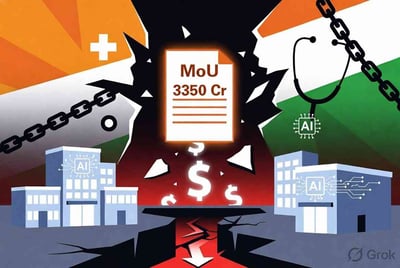
The prestigious image of the 2023 Uttar Pradesh Global Investors Summit has been hit by a wave of controversy as a massive financial scam comes to light. During this high profile economic event in Lucknow, the state administration signed a massive Memorandum of Understanding valued at 3350 crore rupees with a corporate entity known as Obdoo Digital Healthcare Private Limited. Led by its main director Sanjay Kumar, the business venture promised to revolutionize rural medicine by setting up advanced digital doctor clinics across remote villages in Northern India. The official project papers claimed that this massive nationwide expansion would create 70000 jobs while providing video medical consultations, diagnostic laboratories, and medicine stores directly to rural populations. However, instead of delivering a tech driven medical infrastructure, the entire project turned into a nationwide corporate trap that has wiped out the life savings of 40 to 50 local business partners.
The entire scam succeeded because the masterminds brilliantly exploited the supreme administrative trust associated with the top leadership of India. The company printed thousands of promotional brochures featuring clear photographs of Prime Minister Narendra Modi and Chief Minister Yogi Adityanath on the front pages alongside official clearance certificates from the state health ministry. The company web portal went a step further by claiming that the prime minister himself had formally launched the digital doctor clinic project on 19 February 2024 with the chief minister present at the venue. Believing that a project carrying the direct stamp of the country top leaders could never be fake, rural middle class families rushed to secure franchises. Victims transferred anywhere from basic amounts of 43000 rupees for small village booths to massive sums of 45 lakh rupees for major regional hospital partnerships straight into the corporate accounts.
As soon as the funds were pocketed, the sweet promises turned into absolute radio silence and systemic harassment for the rural investors. Across districts like Sambhal, Jhansi, Ambedkar Nagar, Gonda, and Sitapur, families went deep into debt, with many taking private loans at punishing 3 percent monthly interest rates to construct clinics matching the specific layout guidelines. The highly publicized medical setups, digital screens, ultrasound machines, and life saving oxygen gear never showed up at the sites. A few centers that managed to secure a brief launch were nothing but hollow structures used for cosmetic photography. These dummy operations lasted for less than 15 days, stocking a few random boxes of generic medicines just to record promotional marketing footage before shutting down. When ruined families traveled to Lucknow to demand a return of their capital, the operators handed out invalid checks with false names and mismatched signatures before shutting down their main city branch entirely.
This ongoing tragedy highlights a severe structural flaw in how mega investment policies are managed and vetted across different states in modern India. While regional leaders aggressively promote multi crore industrial summits to attract capital, the background validation of these fast talking corporate firms remains highly questionable. Public records show that this healthcare company never submitted its mandatory corporate financial sheets, proving that it had zero actual capital from the beginning. Even though a formal criminal police case has been registered under section 316 2 of the Bharatiya Nyaya Sanhita against the absolute owner in Gonda, the institutional response has been incredibly slow. Disturbingly, the lack of an immediate interstate corporate freeze has allowed the firm to expand into new regions, recently signing a brand new 500 crore rupee agreement with the Rajasthan government. This structural failure to instantly penalize scam entities allows economic offenders to comfortably move from one state to another, using official platforms to exploit public trust.