
Hyderabad Cyberabad Plans 7-km Counterflow BRT Pilot to Ease Heavy Congestion on Busy IT Corridor
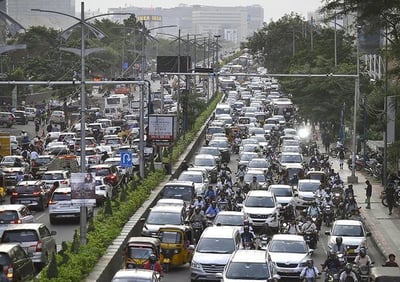
Hyderabad and Cyberabad traffic authorities have joined hands with civic bodies to launch a pioneering seven-kilometer counterflow Bus Rapid Transit pilot project aimed at untangling severe vehicular congestion across the information technology corridor. The proposed trial is set to run along the busy stretch connecting JNTU, Hitec City, Raidurgam, and the Financial District. This roadway experiences some of the heaviest peak-hour traffic jams in the city, where thousands of software professionals, business workers, and daily commuters lose valuable hours stuck in slow-moving vehicle queues every single morning and evening.
Urban planning experts and Cyberabad traffic police noted that standard widening of roads is no longer enough to deal with the surging number of private cars and two-wheelers in the tech zone. Under the counterflow plan, a dedicated lane will be earmarked specifically for passenger buses to move smoothly, even against the normal direction of heavy general traffic, shielded by proper physical barriers and strict signal management. By giving priority to large public buses, the pilot aims to sharply reduce bus travel times, making public transportation far more attractive and punctual than driving personal vehicles.
The selected corridor touches key transit points and metro interchange hubs, making it a natural lifeline for commuters traveling from northern residential neighborhoods into western corporate campuses. Currently, public buses get trapped behind long lines of private vehicles, leading to irregular schedules, overcrowded bus stops, and frustrated passengers who ultimately switch to app-based cabs or private two-wheelers. Civic authorities believe that guaranteeing an unhindered, rapid bus corridor will convince a major share of corporate employees to leave their personal vehicles at home.
Safety arrangements, smart traffic signals, and clear road markings will form the backbone of the experimental trial. Traffic managers will deploy specialized marshals at key intersections and install flexible lane dividers to keep non-bus traffic from entering the counterflow path. Advanced automated camera systems will monitor the stretch around the clock to prevent illegal lane intrusions and ensure that buses can operate at steady speeds without sudden pedestrian or vehicle hazards.
The initiative represents an important step in rethinking urban mobility for modern Indian tech cities. If the initial seven-kilometer experiment delivers faster commutes and cleaner traffic flow along the JNTU to Financial District belt, the administration plans to extend similar dedicated transit models to other high-density routes. With rapid commercial expansion continuing across western Hyderabad, the counterflow bus pilot offers a practical, low-cost solution to create faster, greener, and more reliable everyday journeys for hundreds of thousands of commuters.