
India New Plan To Block River Flow To Pakistan Triggers Dangerous China Reaction
The long standing water sharing agreement between India and Pakistan has hit its lowest point as New Delhi shifts its strategy from diplomatic warnings to direct physical action. Union Jal Shakti Minister CR Patil recently confirmed that the government is aggressively working to ensure that not a single drop of water from the western rivers flows into Pakistan in the upcoming years. Under the strict guidance of Prime Minister Narendra Modi and Home Minister Amit Shah, the central government has confirmed that the historic 1960 Indus Waters Treaty remains held in abeyance. This bold policy shift follows the suspension of the pact after a tragic terror strike in Pahalgam that claimed 26 innocent lives, followed by a tense 4 day border clash that completely halted normal talk channels. India is now moving beyond mere political statements by introducing massive engineering tenders, including the ambitious Chenab Beas Link Tunnel project which is designed to legally redirect 1.9 million acre feet of water every single year into the Beas river basin.
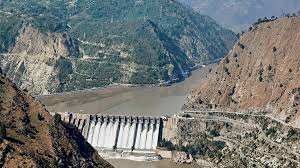
While the phrase not a single drop makes for a powerful political headline, a deeper look at the ground reality shows that completely stopping a massive river system is an extraordinary engineering task that cannot happen overnight. The current infrastructure built by India along the Chenab, Jhelum, and Indus rivers consists primarily of run of the river hydroelectric dams like Salal, Ratle, and Kishenganga. These structures are built to alter the timing and speed of the water flow to generate electricity, but they lack the massive storage capacity required to entirely block or permanently trap these roaring rivers. To counter this limitation, India has recently initiated massive projects such as sediment removal at the Salal Power Station and a 2600 crore rupee plan featuring an 8.7 kilometer long Himalayan tunnel. However, local administrative evaluations show that the actual construction of these mega diversion projects cannot realistically begin before mid 2027 and will require at least 5 to 7 years of intensive labor to become fully operational, meaning Pakistan will not face an immediate total shutdown of its water supply.
The sudden escalation has quickly transformed into a fierce international legal and diplomatic battleground. The Permanent Court of Arbitration based in The Hague recently issued an award that sided heavily with the environmental and agricultural concerns of Pakistan regarding downstream river flows. India directly rejected this ruling, with the Ministry of External Affairs labeling the panel as an illegally constituted body and declaring all of its announcements completely null and void. On the other side of the border, Pakistan maintains that the 1960 water pact has no built in rules for unilateral exit or suspension, meaning the treaty remains legally binding on both nations. The Pakistani Foreign Office has openly warned the global community that any physical move by India to alter the natural path of cross border water will be treated directly as an act of war, arguing that the survival of 250 million people depends heavily on these rivers for food and economic stability.
This intense water conflict has taken on a multi dimensional layer as China steps firmly into the geopolitical picture. Because the Indus River originates in the southwestern Tibet region controlled by Beijing, China holds massive hydraulic leverage over both South Asian nations. Chinese Ambassador Xu Feihong recently confirmed that Beijing is closely monitoring the situation, urging both India and Pakistan to resolve their differences through peaceful negotiation and dialogue rather than unilateral actions. Behind the scenes, the situation reveals a striking global irony as India claims absolute upstream rights over Pakistan while simultaneously fighting downstream battles against China on the eastern side of the continent. While New Delhi constructs multi billion dollar tunnel systems to restrict Pakistan, Beijing is aggressively pushing forward with its own mega dam projects on the Brahmaputra River in Tibet, which will grant China unprecedented control over the water flowing directly into northeastern India. As the nuclear armed neighbors refuse to compromise, the strategic weaponization of cross border rivers is rapidly turning South Asia into a high stakes battleground where environmental security and military pride collide.