
International media on cockroach janta party Global Headlines Focus on Indian Zen G movemen
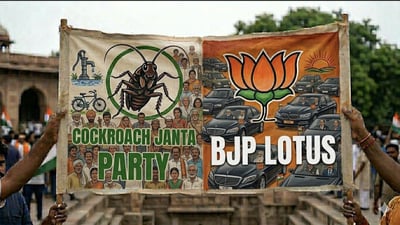
A highly unusual political phenomenon has caught the attention of global news networks as a fresh movement named the Cockroach Janata Party held a peaceful protest in the capital city of Delhi on June 6, 2026. Founded by a young digital activist named Abhijeet Dipke, this unconventional group has managed to outpace established political institutions on internet platforms in record time. On Instagram alone, the group has amassed an astonishing 22,000,000 followers, easily eclipsing the ruling Bharatiya Janata Party’s 9,000,000 followers and the primary opposition Congress Party’s 13,000,000 followers. The unique name is a piece of sharp, ironic humor adopted by young citizens who joke that they are just like cockroaches, incredibly resilient, surviving in tough conditions, unemployed, and spending all day staring at screens. What started as an online ecosystem of satirical memes, funny videos, and self-deprecating jokes has rapidly transformed into a genuine ground-level mobilization that is demanding immediate accountability from the highest echelons of government.
The catalyst behind this sudden uprising is a mixture of long-simmering economic anxieties that Indian youth say have reached a breaking point. For several years, young citizens have battled persistent issues including recurring educational exam scams, stagnant job markets, and diminishing career options. Even though the broader economy of the country has displayed strong statistical growth numbers, creating stable, formal, and non-agricultural employment for a massive demographic remains an immense challenge. Economic data indicates that the urban youth unemployment rate recently hovered around 14 percent, with international labor organizations estimating general youth joblessness closer to 16 percent. Millions of highly qualified and educated graduates find themselves forced into low-paying, insecure roles that do not match their skills. Compounding this domestic stress is a sharp rise in fuel and domestic gas prices driven by international conflicts involving Iran, which has directly squeezed household budgets across the middle and lower classes.
This sudden explosion of digital dissent has caught the attention of major global media networks, who view the situation through different lenses. American outlets like CNN note that while the current administration has successfully navigated major hurdles over the past 10 years, such as the farmer protests, demonetization, and pandemic waves without losing electoral ground, this current youth anger feels different and harder to suppress. British media points out that the dual pressure of youth unrest and international fuel inflation is actively targeting the popular image of leadership. Meanwhile, regional commentators in neighboring countries like Pakistan, Bangladesh, and Nepal are drawing direct comparisons to past historic youth movements in Asia where internet mobilization eventually spilled onto the streets and managed to destabilize powerful regimes. Observers note that the sheer demographic weight of India, where over 25 percent of the population is under 30, means any widespread youth dissatisfaction carries significant political weight.
However, the future trajectory of this movement remains highly uncertain and faces steep challenges. Skeptics and supporters of the ruling establishment dismiss the entire phenomenon as an internet fad, arguing that virtual likes, shares, and viral video views rarely translate into sustainable, organized ballot-box success on the ground. They suggest the enthusiasm will fizzle out once the initial online novelty fades away. Furthermore, any unconventional movement in India must navigate a historically strong and highly disciplined state machinery that has previously shown great resolve in handling massive public demonstrations. For the Cockroach Janata Party to survive beyond a viral moment, it will need to transition from humorous internet complaints into a structured political framework capable of offering concrete policy solutions. Whether this movement fades away as a digital trend or fundamentally changes the political landscape, it highlights a deep demand for economic security and a desire for fresh political narratives among the next generation of voters.