
Iran Media Releases AI Propaganda Video Targeting Melania Trump and Barron Trump
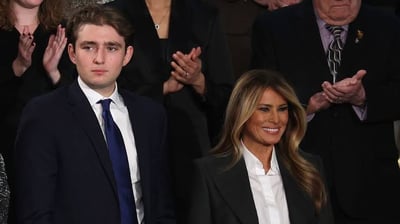
A chilling foreign propaganda video released by an Iranian news outlet linked to the Islamic Revolutionary Guard Corps has triggered intense security investigations across American intelligence networks. On July 27, 2026, the Tasnim News Agency published a two minute artificial intelligence generated clip titled Where to Kill Melania. Narrated in Farsi, the strategic broadcast directly singles out First Lady Melania Trump alongside her 20 year old son Barron Trump. The piece fuses public biographical details, satellite imagery visuals, and generated graphics to outline theoretical attack scenarios across high end Manhattan shopping corridors like Fifth Avenue.
The dramatic narration focuses heavily on the personal habits and wardrobe routines of Melania Trump, labeling her interest in high fashion as a primary operational vulnerability. The clip highlights specific luxury department stores like Bergdorf Goodman and Saks Fifth Avenue, describing how potential attackers could track advance security sweeps by federal agents. In a series of unusual suggestions, the narrator outlines methods such as bribing personal stylists or contaminating boutique garment deliveries with deadly nerve agents like VX. The video culminates in an explicit threat directed at the youngest member of the presidential family, featuring text that reads Barron Trump wait for us.
Federal authorities reacted swiftly to the digital threat, with the United States Secret Service confirming active review and intelligence monitoring. Official agency representatives emphasized that while specific protective protocols remain confidential, all direct and perceived threats targeting official protectees receive immediate investigative attention. Intelligence professionals observing the situation note that while the tactical scenarios presented in the video are largely impractical due to strict chemical detection systems and multi layered agent protection, the underlying psychological warfare strategy aims to intimidate family members and project an impression of deep intelligence penetration.
This digital campaign represents a dramatic shift in foreign state messaging, moving away from traditional military posturing toward targeted digital intimidation. By leveraging accessible artificial intelligence generation tools, state sponsored outlets can craft highly cinematic threat narratives at minimal cost. The deployment of public shopping locations and personal references reflects a deliberate effort to breach the psychological boundary between high level geopolitical conflict and private family life. As security agencies adapt to these evolving AI generated threats, the incident underlines how modern foreign interference continuously blurs the line between online propaganda and real world security operations.