
Nepal Bihar Border Communal Violence Leaves 1 Dead And 22 Injured In Sunsari District
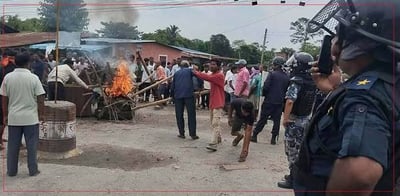
A peaceful evening in southeastern Nepal turned into a scene of widespread panic and destruction as deep community disagreements erupted into open violence. On July 26, 2026, a group of local devotees carrying sacred water from the Koshi Barrage during the annual Bolbam pilgrimage arrived in the Kaptanganj market square within Ward 3 of Dewanganj Rural Municipality in Sunsari district near the Bihar border. As the procession moved through the crowded streets with loud music playing on high powered sound systems, residents from another local group requested that the organizers turn down the volume. What started as a simple request quickly transformed into a heated verbal argument between community members. Arguments about the loud noise soon expanded into disputes over the public display of religious flags along the main roadway. Within minutes, verbal anger turned into physical pushing, throwing of heavy stones, and open street clashes that caught surrounding shopkeepers and passersby in the middle of a rapidly worsening crisis.
Local police officers from the nearby Kaptanganj post arrived at the scene shortly after 10 in the evening to separate the opposing groups, but the gathering crowd grew too large for the small unit to manage. Hundreds of people from neighboring villages joined the confrontation while carrying wooden sticks, bamboo poles, and heavy bricks. As stone pelting intensified, additional security forces from the Dewanganj Area Police Office and the Armed Police Force rushed into the area. Police officers faced continuous waves of flying objects, resulting in head injuries to senior officers including 1 police inspector who required 5 surgical stitches. To control the swelling crowd, security personnel first launched multiple rounds of tear gas canisters into the air and fired warning shots into the sky. When those actions failed to stop the advancing crowd from damaging public property and setting fire to parked vehicles, security forces opened live fire around 10:45 in the evening. A 24 year old resident named Om Prakash Mehta was struck by a bullet during the chaos and succumbed to his injuries, while 22 other individuals, including 13 security personnel, suffered moderate to severe injuries during the violent struggle.
The tragic loss of life brought intense public outrage across the surrounding border towns on the following morning. Protesters defied initial movement restrictions, marching onto major roads, burning rubber tires, and blocking transport corridors connecting local villages to the Indian state of Bihar. Angry crowds targeted commercial properties, damaging a local medical pharmacy, grocery stores, and a vehicle repair garage in the central market square. Facing worsening disorder, the Sunsari District Administration Office declared an indefinite curfew covering 5 primary commercial centers, including Harinagar, Bhutaha, Kaptanganj, Ghuski, and Dewanganj. Authorities strictly prohibited public gatherings of more than 4 people, political rallies, and public sit-in demonstrations across both Harinagar and Dewanganj rural municipalities. To maintain public safety and protect vital trade infrastructure, security officials deployed nearly 400 armed security personnel alongside units of the Nepal Army to patrol sensitive neighborhoods and clear road blockades along the nearby East West Highway.
This tragic event highlights the delicate balance required to maintain social harmony within densely populated border regions where cultural traditions and local sentiments frequently overlap. Disputes over public noise levels and religious symbols often serve as immediate triggers that unlock deeper, underlying social friction among neighboring communities. When local authorities fail to establish clear guidelines for large public processions or lack early conflict resolution mechanisms, minor disagreement can rapidly escalate into full scale public emergencies. Moving forward, lasting peace in Sunsari will depend not only on strict law enforcement patrols and curfew orders, but also on active dialogue involving civil society leaders, local political representatives, and administration officials working together to build trust, prevent future misunderstandings, and preserve communal unity.