
Is Ambani & Adani Controlling India and Deciding Its Meetings? Rahul Questions Govt as Rubio Skips Delhi for Reliance Jamnagar and Mumbai Talks
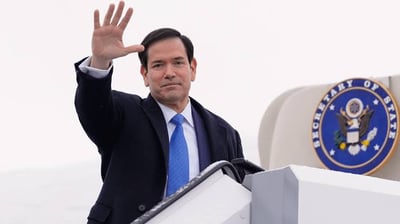
A diplomatic controversy has erupted after Leader of the Opposition Rahul Gandhi publicly attacked the central government over U.S. Secretary of State Marco Rubio’s upcoming travel schedule to India. Rather than conducting formal bilateral consultations in the national capital, the top American diplomat is scheduled to skip New Delhi entirely, traveling directly to Gujarat to inspect Reliance Industries’ refining hub in Jamnagar before meeting External Affairs Minister S. Jaishankar and senior ministry officials in Mumbai.
Seizing on the unusual itinerary, Gandhi took to social media to ask whether corporate conglomerates—specifically the Ambani and Adani groups—have taken control of India's state apparatus to the point of dictating where and how the sovereign republic conducts official diplomacy. Gandhi remarked that the American diplomat appeared to be summoning government representatives to regional corporate hubs, claiming career diplomats in the Ministry of External Affairs (MEA) were left bewildered by the arrangement and calling on Prime Minister Narendra Modi to explain the deviation from established diplomatic norms.
The friction intensified after U.S. Ambassador Sergio Gor disclosed the schedule during a public forum, revealing that Indian officials, including Minister Jaishankar, would travel from Delhi to Mumbai to conduct official talks on the sidelines of Rubio’s corporate engagements. The tour centers heavily on bilateral energy cooperation and commercial negotiations, prominently featuring Reliance’s Jamnagar facility—the largest single-site crude oil refining complex in the world—which plays an outsized role in processing international crude flows and ongoing multi-billion-dollar energy pacts.
Gandhi and opposition parties framed the diplomatic detour as the logical extension of a decade-long pattern where key strategic sectors have been concentrated in the hands of two dominant corporate houses. Since 2014, the Adani Group has expanded rapidly across India's infrastructure backbone, securing long-term contracts and concessions running into hundreds of billions of dollars across ports, airports, coal mining, power transmission, green hydrogen, and renewable energy. Under a single privatization wave in 2019, the group won all six privatized civilian airports (Ahmedabad, Lucknow, Mangaluru, Jaipur, Guwahati, and Thiruvananthapuram) despite having zero prior aviation operating experience, while simultaneously capturing over a dozen commercial seaports and multi-lakh-crore long-term thermal power purchase agreements across various states.
Mukesh Ambani’s Reliance Industries witnessed an equally sweeping expansion into telecom, retail, petrochemicals, green energy giga-factories, and digital infrastructure. Opposition leaders argue this commercial ascendance was heavily aided by regulatory decisions, including preferential spectrum and licensing rules during Jio’s entry, sweeping market consolidation in retail through distressed acquisitions, and state-backed bilateral partnerships with foreign energy giants.
More critically, the opposition and civil liberties groups have repeatedly alleged that state law enforcement machinery—specifically the Central Bureau of Investigation (CBI) and the Enforcement Directorate (ED)—has been weaponized to facilitate this corporate consolidation. Critics point directly to the acquisition of Mumbai International Airport (MIAL), where previous promoter GVK was subjected to CBI corruption FIRs and ED money-laundering raids in mid-2020 while resisting an Adani buyout; within weeks of the investigative crackdowns, GVK yielded, allowing Adani Airport Holdings to take over the country’s second-busiest hub. Similar allegations of coercive agency intervention, regulatory harassment, or tax-authority pressure were raised in the acquisitions of Krishnapatnam Port, Karaikal Port, and various renewable and cement assets, where competing bidders and debt-stressed original owners withdrew or surrendered operational control under the shadow of central investigations.
Foreign policy analysts and opposition leaders point out that subordinating formal state-to-state diplomacy to corporate tour stops creates a damaging institutional precedent. Standard bilateral protocol dictates that visiting foreign ministers hold delegation-level talks at ministerial headquarters in Delhi to maintain national dignity and sovereign protocol. By rerouting the External Affairs Ministry’s leadership to a commercial financial hub to fit around a private conglomerate's agenda, critics argue the administration has openly blurred the lines between national foreign policy and billionaire corporate interests.