
Modi Govt Clears Rs 52,878 Cr IDBI Bank Sale to Fairfax: Critics Flag Fire-Sale of Prime Real Estate, Pointing to Rs 12,500 Cr Hyderabad Training Campus Alone
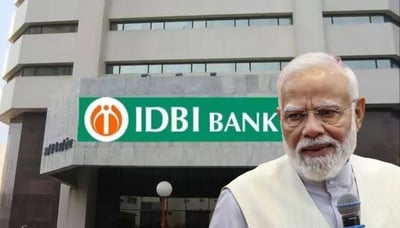
The Modi government's decision to clear the strategic disinvestment of IDBI Bank to Canadian billionaire Prem Watsa’s Fairfax Financial Holdings for Rs 52,878 crore has triggered sharp scrutiny over public asset valuation. Under the approved transaction, the Modi government and the Life Insurance Corporation of India (LIC) will offload a combined 60.72% controlling stake, effectively privatizing the historic institution. While government officials have framed the transaction as a landmark triumph for banking sector consolidation and recapitalization, financial analysts and transparency advocates argue that the transaction amounts to an institutional distress sale that discounts vast physical assets built with public capital.
Central to the growing controversy is the lender's real estate portfolio. Commentators on social media and independent asset observers pointed out that IDBI Bank owns prime real estate nationwide, none more prominent than its 50-acre staff training campus—the IDBI Centre for Excellence in Banking and Finance (ICBF)—located in the high-density Financial District of Gachibowli, Hyderabad. With commercial land prices in the IT corridor commanding upwards of Rs 250 crore per acre, the market value of that single land parcel alone is estimated at Rs 12,500 crore—accounting for nearly one-fourth of the total valuation assigned to the entire 60% stake purchase.
Critics contend that by valuing IDBI Bank purely on current financial multiples and equity valuations, transaction managers systematically overlook underlying property, infrastructure, and nationwide branch assets accumulated over six decades. Selling the lender as a going concern without unbundling or monetizing land banks hands private foreign buyers immense sovereign-backed land reserves at steep discounts, transforming a strategic bank divestment into a windfall real estate acquisition.
Opposition parties and bank employee unions have intensified calls for an immediate suspension of the transaction pending an independent physical asset audit. They emphasize that taxpayers and policyholders injected tens of thousands of crores to nurse IDBI Bank back to profitability following its bad-debt crisis. Now that the lender has turned profitable and cleaned its balance sheet, offloading the enterprise along with prime metropolitan real estate to an overseas entity reflects flawed disinvestment priorities that transfer long-term national wealth into private hands under the banner of economic reform.
This controversy over IDBI Bank is not an isolated event; rather, it reflects a broader policy trajectory under Prime Minister Narendra Modi’s administration concerning the offloading and commercialization of state-owned enterprises and public infrastructure. Since 2014, the Modi government has pivoted toward aggressive monetization and privatization strategies. The most high-profile full privatization occurred in January 2022, when the national carrier Air India, alongside Air India Express, was handed over to the Tata Group's Talace Private Limited in an enterprise deal valued at Rs 18,000 crore, structured around Rs 2,700 crore in cash and the assumption of Rs 15,300 crore in legacy debt. Later that year, in July 2022, Tata Steel Long Products finalized the takeover of Neelachal Ispat Nigam Limited (NINL) for Rs 12,100 crore. Smaller public sector units have followed similar paths, including the sale of Ferro Scrap Nigam Limited (FSNL) to Japan's Konoike Transport Company for Rs 320 crore, and Indian Medicines Pharmaceutical Corporation Limited (IMPCL) to Skymap Pharmaceuticals for Rs 118.73 crore.
Parallel to direct corporate stake sales, the Modi government initiated major long-term asset transfers through public-private partnerships and commercial concessions, an area where the Adani Group emerged as the central beneficiary. Between 2019 and 2020, through competitive bidding based on per-passenger fee models, Adani Enterprises secured 50-year operational and management leases for six major public airports: Ahmedabad, Lucknow, Mangaluru, Jaipur, Guwahati, and Thiruvananthapuram. This footprint expanded dramatically in July 2021 when the Adani Group completed its acquisition of a 74% controlling stake in Mumbai International Airport Limited (MIAL) from the debt-laden GVK Group, effectively gaining operational control over Mumbai’s primary airport and the greenfield Navi Mumbai International Airport project. Where outright private sales proved politically or structurally challenging, the Modi government orchestrated massive inter-PSU equity buyouts to meet disinvestment targets, compelling cash-rich public entities to absorb state stakes—such as ONGC purchasing the government’s 51.11% holding in HPCL in January 2018 for Rs 36,915 crore, Power Finance Corporation acquiring 52.63% in REC Limited for Rs 14,500 crore in March 2019, and NTPC absorbing THDC and NEEPCO for Rs 11,500 crore in March 2020.
The scale and concentration of public asset transfers have fueled fierce political pushback, particularly over allegations of regulatory favoritism toward conglomerates like Adani and Ambani. Opposition leaders and civil liberties advocates have consistently highlighted data showing that over 85% to 95% of active investigations, summons, and property attachments executed by premier central agencies—most notably the Enforcement Directorate (ED) and the Central Bureau of Investigation (CBI)—have targeted opposition politicians and non-aligned business entities. In contrast, critics argue that despite sweeping allegations, corporate headquarters linked to Gautam Adani and Mukesh Ambani have never faced physical dawn raids or executive arrests by the ED or CBI, creating a persistent public debate over two-tier enforcement standards.
This perceived institutional shield has drawn scrutiny because both conglomerates have been repeatedly implicated in major financial and corporate governance controversies exposed by investigative reports, regulatory bodies, and international watchdogs. In January 2023, U.S.-based short-seller Hindenburg Research published a damning dossier accusing the Adani Group of engaging in brazen accounting fraud, improper stock manipulation, and routing illicit capital through offshore shell entities based in tax havens like Mauritius, the UAE, and Cyprus. The report triggered an unprecedented market rout that wiped out over $100 billion in market value, leading to Supreme Court interventions and SEBI regulatory inquiries. Prior to that, the Directorate of Revenue Intelligence (DRI) investigated allegations that Adani power subsidiaries engaged in massive trade-based money laundering through the over-invoicing of imported Indonesian coal and capital equipment via Middle Eastern and Southeast Asian intermediaries to inflate local electricity tariffs.
Mukesh Ambani’s Reliance Industries Limited (RIL) has likewise faced protracted regulatory scrutiny and penalties over the years. In 2017, the Securities and Exchange Board of India (SEBI) concluded a decade-long insider trading probe into the 2007 trading of Reliance Petroleum Limited (RPL) shares, ordering RIL to disgorge over Rs 447 crore plus substantial accrued interest and barring the company from equity derivatives trading. In 2021, SEBI levied further multi-crore penalties against RIL and Mukesh Ambani personally over these manipulative trades. Furthermore, earlier audits by the Comptroller and Auditor General (CAG) severely questioned capital expenditure inflation and gas production shortfalls in Reliance’s KG-D6 deepwater basin, while state-run ONGC pursued prolonged legal battles alleging that billions of cubic meters of natural gas had illicitly migrated from its contiguous blocks into Reliance wells.
Together, the proposed distress valuation of IDBI Bank's prime landholdings, the rapid concentration of national infrastructure into a handful of corporate hands, and the stark contrast in enforcement scrutiny have crystallized broader concerns that economic liberalization under the Modi government is increasingly favoring corporate consolidation at the expense of public wealth and institutional transparency.