
Italian Schools Face Burqa And Niqab Ban As Giorgia Meloni Moves To Limit Foreign Students
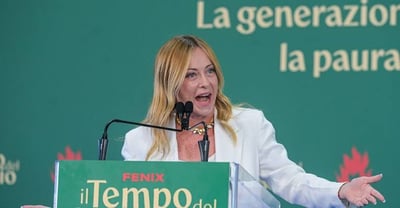
Italian Prime Minister Giorgia Meloni has announced plans to introduce new legislation to ban the wearing of burqas and niqabs inside schools across Italy. The proposal also aims to set a legal cap on the number of foreign students permitted in each classroom, alongside introducing compulsory language lessons for parents who struggle to speak Italian. The announcement was made before a large gathering of young supporters at the annual national festival of the youth wing of her governing Brothers of Italy party in Rome. The move signals a major effort to bring classroom rules directly into national policies on immigration and cultural integration.
Addressing the cheering crowd, Meloni argued that schools must remain places where individual identities are visible to everyone. She insisted that students must attend class with their faces uncovered, stating that no community tradition can justify making a young girl or woman hide herself in public. The planned government decree specifically singles out the burqa, which covers the entire body, and the niqab, which covers the face and leaves only the eyes visible. However, the proposal does not apply to the simple hijab headscarf that leaves the face exposed, keeping the focus entirely on garments that conceal facial identity.
The second major pillar of the plan involves putting a legal cap on foreign enrollment within individual classes. While the government has not yet specified the exact numerical limit or percentage, Meloni defended the decision by explaining the practical reality of classroom learning. She explained that when only one non-Italian speaking child enters a room, classmates and teachers can easily offer personal support, helping that pupil learn the language and make friends quickly. However, when non-Italian speaking students become the majority in a single room, genuine education breaks down, which she described as a form of neglect rather than true integration.
The proposed decree will also require immigrant parents to attend mandatory Italian language classes if their children face severe challenges settling into the educational system. Meloni stressed that anyone who chooses to live in Italy and build a long-term future must learn the national language, understand the local culture, and show respect for established laws. She stated that helping parents communicate effectively is the only practical way to ensure immigrant families actively participate in the wider social life of their neighborhoods and support the academic progress of their children.
The announcement comes at a time when schools across the country are seeing significant demographic changes. Data compiled by educational research groups like the ISMU Foundation shows that students without Italian citizenship now account for roughly eleven point six percent of total school enrollment across the country. This translates to nearly twelve foreign children out of every one hundred students nationwide. In several heavily populated northern towns and industrial manufacturing belts, that proportion is significantly higher, leading some local headteachers to report classes where a large majority of children do not speak Italian fluently at home.
The legal journey of the plan will begin once the decree is formally presented to the national Council of Ministers. Under Italian constitutional law, executive decrees approved by the cabinet take immediate emergency effect but must secure formal ratification from the national parliament within sixty days. If lawmakers fail to approve the text within that timeframe, the decree expires entirely. Given the firm majority held by the right-wing coalition in both chambers of parliament, government leaders anticipate smooth passage for the educational reforms.
The policy announcement also carries significant political weight as Italy heads toward a nationwide general election in 2027. Since taking office in October 2022, Meloni has balanced her conservative roots with mainstream European diplomacy, transforming her image from a political outlier into a leading voice within the European Union. Her administration recently became the longest-serving uninterrupted government in Italy since the end of the Second World War. Championing cultural identity and stricter school rules allows her to energize core grassroots supporters while presenting the classroom quotas as a practical solution to educational falling standards.
Critics from left-wing opposition parties and civil rights groups have raised concerns about the practical application of the measures. Educators warn that setting strict classroom ceilings could force headteachers to separate siblings or turn away local neighborhood children, creating extra transport burdens for immigrant families. Advocacy groups have also argued that imposing dress restrictions might unintentionally encourage conservative families to withdraw girls from public education altogether. Despite these objections, the government maintains that clear rules on language and dress are essential to protect equal opportunities and keep public schools unified.