
King Fahd Airport Attack Kills One and Leaves Eight Injured in Saudi Arabia as Investigators Probe Possible Houthi Link
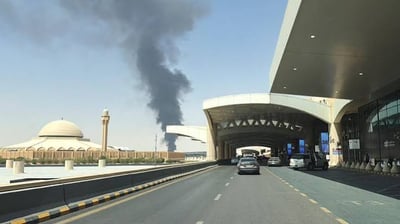
A deadly air assault has struck King Fahd International Airport in the eastern Saudi Arabian city of Dammam, leaving one person dead and eight others wounded. Medical workers and security units rushed across the open passenger terminal and aircraft parking areas to provide immediate first aid to victims who suffered wounds ranging from light cuts to critical bodily injuries. Saudi Arabia General Authority of Civil Aviation officially confirmed the casualties, stating that security officers secured the area while emergency teams quickly moved all injured individuals to government hospitals for urgent treatment.
The official aviation authority reported that the blast caused noticeable structural damage to airport properties, leading international air tracking systems to divert multiple incoming passenger planes to alternative runways across the Persian Gulf. While state aviation officials confirmed the death toll and the hospitalizations, government reports did not immediately name the exact group responsible or identify the precise projectile used. However, security agencies and defense analysts immediately began probing whether the strike was part of an ongoing retaliation campaign launched by Yemen based Houthi fighters.
The Houthi movement, officially known as Ansar Allah, traces its origin back to the northern mountains of Saada in Yemen during the nineteen nineties. The movement was established by religious leader Hussein Badreddin al Houthi through a cultural revival group called the Believing Youth. They belonged to the Zaidi branch of Islam and initially came together to counter foreign religious influences being spread by neighboring Saudi Arabia, as well as to fight against local economic neglect by Yemen's central government. Over time, state crackdowns and the death of their founder transformed the peaceful group into an armed resistance movement that seized Yemen's capital, Sanaa, in 2014, overthrowing the government.
The direct confrontation between the Houthis and Saudi Arabia exploded into open warfare in 2015 when Saudi Crown Prince Mohammed bin Salman launched an armed foreign intervention while serving as defense chief. The Saudi military coalition aimed to defeat the Houthis and restore the internationally recognized government through heavy airstrikes. However, that military campaign triggered immense civilian hardship and economic blockades across Yemen. In response, Houthi fighters developed long distance drones and missiles with external help, repeatedly targeting Saudi infrastructure to demand an end to the siege.
Security experts note that the sudden resurgence of Houthi strikes deep inside Saudi territory is driven by multiple fresh grievances. A fragile ceasefire that had paused direct Saudi Houthi fighting broke down following airport bombings in Yemen and renewed economic disputes over oil ports, banking restrictions, and airspace controls. Houthi leaders accused Saudi authorities of continuing behind the scenes economic blockades and supporting rival local factions, prompting the group to resume long range attacks against Saudi energy networks and public transport centers.
The escalating cross border attacks also carry a direct connection to Israel and the actions of Prime Minister Benjamin Netanyahu. Following the outbreak of intense fighting and devastating civilian casualties during the Gaza genocide, Houthi leadership declared active military solidarity with Palestinian groups. The group launched long range ballistic projectiles toward Israeli cities and initiated armed attacks against cargo vessels navigating the Red Sea trade lanes to enforce an economic blockade on Israel. When Israeli air forces responded with direct airstrikes against Houthi held ports and government figures in Yemen, the regional conflict expanded rapidly.
Saudi Arabia became a target in this wider regional storm because Houthi commanders view the Saudi kingdom as an indirect partner to Israeli and Western interests. Before the latest regional violence erupted, Crown Prince Mohammed bin Salman was engaged in diplomatic talks with the United States to potentially normalize formal relations with Israel. Houthi leaders argue that by hosting American military forces, purchasing Western weapons, and keeping regional trade routes secure, the Saudi administration aids the geopolitical objectives of the Netanyahu government and its allies, making Saudi transport hubs prime targets for political pressure.
The growing wave of attacks has also highlighted the prominent role of the United States in regional defense. Washington has supplied Saudi Arabia with billions of dollars in Patriot interceptor batteries, advanced radars, and fighter planes to defend domestic infrastructure. However, the persistent threat of aerial barrages prompted the United States State Department to order non emergency embassy staff and their families to evacuate Saudi Arabia immediately due to acute security risks.
The deadly incident at Dammam occurred right after another violent strike in the Eastern Province on the very same day. Earlier, Saudi air defense batteries intercepted an incoming explosive drone targeting an oil production site at the Saudi Aramco Shaybah field. Falling metal fragments from that mid air explosion killed two foreign workers, identified as citizens of the Philippines and Nepal, while injuring two other workers from Pakistan and India and igniting a vehicle fire outside the main boundary fence.
The Dammam airport blast also follows an earlier projectile strike that hit King Khalid International Airport near Riyadh, where one person was killed and eleven people were injured. This persistent targeting of commercial gateways shows a pattern intended to disrupt air transport, discourage foreign business travel, and test national air defense shields.
For ordinary travelers and foreign laborers, these sudden explosions bring severe danger to daily life. International hubs like King Fahd International Airport rely on thousands of workers from South Asia and Southeast Asia to clean buildings, handle passenger luggage, and service airplanes. When falling fragments and explosive blasts strike civilian zones, it is daily wage earners and transit passengers who face the terrible consequences of regional geopolitical battles.
Forensic engineers and civil aviation inspectors in Dammam continue to examine physical debris to verify the launch site and weapon systems used in the attack. While local authorities work to restore normal flight schedules, the incident highlights how unresolved regional disputes, historical Yemen grievances, and wider Middle Eastern tensions continue to endanger civilian transport hubs.