
Manipur Valley Shutdown Disrupts Life After Three Meitei Men Killed In Militant Attack: Why Modi Govt Could Not Bring Peace In Manipur?
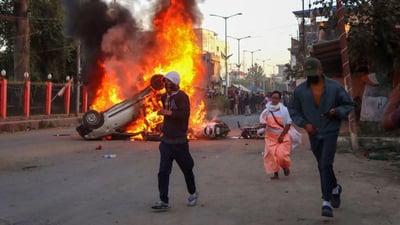
Normal life came to a complete standstill across the valley districts of Manipur as roads emptied, commercial establishments pulled down their shutters, and public transport vehicles went off the streets. A total forty-eight hour shutdown called by local civil bodies and rights groups took effect, leaving key city centers deserted while security forces stepped up patrols across sensitive junctions. The massive strike was organized to protest the killing of three innocent villagers who died in a sudden gun ambush, reigniting deep grief and anger across the conflict-ridden northeastern state.
The latest tragedy occurred when a group of fourteen local men went to collect firewood along the foothills in the border area between Imphal East and Kangpokpi districts. Suspected militants opened unprovoked fire with automatic weapons from concealed positions on the ridges above. Two men died on the spot, while a third victim succumbed to severe gunshot wounds shortly after being rushed to a hospital. Three other villagers suffered serious bullet injuries and are battling for recovery. The bloodshed shattered weeks of uneasy quiet, causing panic among rural farming families who risk their lives simply stepping out of their villages to earn a basic living.
The killings provoked an immediate public backlash across Imphal West, Imphal East, Bishnupur, Thoubal, and Kakching districts. Major trade centers, vegetable wholesale markets, private financial institutions, and government offices remained completely closed, while public buses and private vehicles stayed off the roads. Colleges, universities, and schools suspended all classes as students, elders, and women groups gathered along neighborhood streets to stage sit-ins and burn tires in protest. Protesters held banners demanding decisive security action to disarm illegal militant groups and protect innocent citizens from repeated attacks.
The strike has brought back searing questions regarding central governance, with citizens and civil rights bodies asking why the Modi government could not bring peace in Manipur. Violence first erupted in early May 2023, yet after three painful years of ethnic unrest, hundreds of civilian deaths, and the displacement of over sixty thousand people into temporary relief camps, lasting stability remains completely missing. Opposition leaders and civil society networks pointed out that the central administration has treated the crisis with persistent indifference, leaving the northeastern state to suffer repeated rounds of bloodshed without a decisive political solution.
Community leaders and local elders expressed extreme frustration over repeated claims made by central ministers that normalcy had returned to the hills and valleys. Protesters argued that celebrating stability in Delhi while innocent citizens continue to be killed in their fields is an insult to grieving families. Relatives of the deceased noted that people in Manipur feel completely abandoned by the central leadership, as high-level meetings and peace committees set up by the Union Home Ministry have repeatedly failed to disarm illegal outfits or stop armed groups from launching fatal ambushes along rural buffer zones.
Security forces comprising state police commandos and central paramilitary battalions launched intensive combing operations across nearby forest ranges to hunt down the attackers. Authorities arrested three suspected Kuki-Zo militants during initial cordon exercises, recovering automatic rifles and ammunition from the area. However, local youth organizations stated that piecemeal combing drives following fatal ambushes do not address the core crisis. They maintained that security agencies must maintain round-the-clock protection along vulnerable fringe locations rather than merely responding after innocent lives have already been lost.
The political fallout from the incident has deepened divisions across the regional political spectrum. Opposition party leaders demanded immediate accountability, questioning why the double-engine governance model led by the ruling party has proved completely ineffective in protecting the basic right to life. Human rights monitors noted that three years of division have created physical and psychological walls between communities, turning former neighbors into armed rivals and paralyzing economic development, healthcare access, and basic schooling for an entire generation of children.
The administration remains on high alert with additional paramilitary columns deployed across sensitive border zones to prevent fresh retaliatory clashes. Meanwhile, the people of the state remain locked inside their homes, mourning their dead and asking why authorities have failed to display genuine political will to heal the deep fractures and bring an end to three years of turmoil.