
Abhijeet Dipke Rejects Protests Comparison With France Nepal And Bangladesh As Critics Question If Government Is Hiding Behind Foreign Riots To Shield Gyanesh Kumar Over Election Fraud Allegations
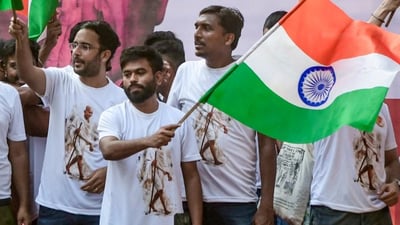
A major political row has erupted across the country after prominent youth activist and Cockroach Janta Party founder Abhijeet Dipke strongly dismissed all attempts by political commentators and government defenders to draw parallels between peaceful domestic student protests and violent street rebellions witnessed in France, Nepal, and Bangladesh. Addressing his supporters, Dipke emphasized that while youth uprisings in European and South Asian capitals descended into arson, property destruction, and chaotic street confrontations, the agitation in India against the Election Commission has remained strictly peaceful, disciplined, and deeply anchored in Mahatma Gandhi's principles of civil satyagraha.
The current wave of youth anger in India stems directly from grave allegations surrounding Chief Election Commissioner Gyanesh Kumar and the Election Commission's controversial Special Intensive Revision drive. Student organizations, civil rights advocates, and opposition parties have accused the poll body of carrying out an unprecedented voter disenfranchisement exercise that deleted an estimated thirteen crore voter names from official registries. Protesters allege that automated and opaque systems were used to remove young voters, poor communities, and marginalized sections without fair physical checks or transparent verification. Anger deepened after investigative revelations showed internal red flags raised by senior poll officials were brushed aside, leading to sustained youth calls demanding Kumar's immediate resignation and an independent audit of deleted voter rolls.
Rather than addressing these foundational concerns about voter deletions, authorities responded with preventive detentions, police lathi charges, and heavy security measures in the national capital. Key youth movement leaders, including co-convenors Saurav Das and Ashutosh Ranka, were placed behind bars in judicial custody after attempting to peacefully unfurl the national flag at Jantar Mantar. Pointing to their detention, Dipke noted that Indian youth activists accepted going to jail with a smile, showing deep compassion and moral restraint rather than burning public vehicles or clashing with law enforcement like crowds in Paris or Dhaka.
This sharp contrast has triggered intense political questioning from opposition leaders and civil society monitors, who ask whether the Narendra Modi administration is intentionally using the imagery of violent foreign protests in France, Nepal, and Bangladesh to create fear among domestic citizens. Critics contend that pro-establishment narratives are deliberately magnifying foreign chaos to label peaceful domestic demonstrators as security threats and deflect public scrutiny away from the serious allegations of voter roll manipulation hanging over Gyanesh Kumar. By pointing to arson and riots in foreign nations, critics argue, political spin doctors attempt to hide serious domestic institutional failures and justify harsh police action against peaceful student protesters.
Supporters of the administration reject these allegations, arguing that the government has a constitutional duty to prevent unlawful assemblies and ensure public safety before anti-establishment agitations turn destructive. Government representatives maintain that the voter roll revision carried out by the Election Commission is a completely routine, transparent administrative clean-up aimed at eliminating duplicate, migrated, and deceased entries. They argue that linking routine electoral maintenance to government conspiracies is an unfounded political distraction created by opposition factions facing electoral setbacks.
However, an objective evaluation of the political situation reveals that equating peaceful domestic dissent with violent foreign insurgencies undermines India's own constitutional traditions. The right to assemble peacefully and question electoral procedures is an essential feature of a healthy democracy. Attempting to hide serious voter deletion questions behind foreign unrest cannot bridge the growing trust deficit between the younger generation and central democratic institutions. True democratic stability requires complete institutional transparency, verifiable voter roll audits, and an open ear to young citizens rather than security clampdowns and comparisons with foreign riots.