
Mercedes Benz India Issues Official Customer Advisory After Top Vlogger Reports Massive Mileage Drop
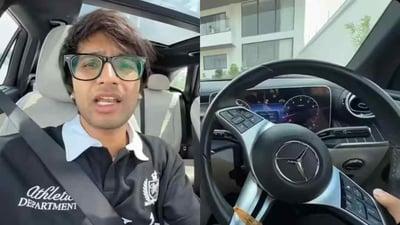
The rapidly growing public debate surrounding India transition to green fuels has reached the luxury automotive sector after a massive social media controversy erupted over fuel efficiency. On July 13 2026, premium German automaker Mercedes Benz India officially issued a nationwide customer advisory to clarify the technical compatibility of its luxury vehicle lineup. The sudden corporate intervention was triggered by a highly popular video log uploaded by the country most followed daily creator, Sourav Joshi, who operates out of Haldwani in Uttarakhand. In his viral broadcast titled Race With Brothers Kon Jeetega, the content creator shared live dashboard metrics from his high end Mercedes Benz GLC 300 4MATIC petrol variant, expressing absolute panic over a sudden and severe drop in fuel economy. The vlogger demonstrated to his audience of over 41 million subscribers that his vehicle standard efficiency rating had plummeted from an impressive 17 kilometers per liter straight down to a shocking 5 kilometers per liter within a brief span of just 48 hours, placing the blame entirely on the E20 ethanol blended petrol available at local filling stations.
The sudden corporate statement released by the automobile manufacturer seeks to reassure wealthy premium vehicle owners while subtly addressing the widespread digital anxiety. The official advisory released by the luxury brand explicitly stated that all Mercedes Benz petrol BS VI vehicles sold across the domestic market are completely materially compatible with E20 fuel blends and have been fully certified by the relevant regulatory authorities. The company management emphasized that customer safety, vehicle reliability, and long term mechanical performance remain their highest priorities, offering full technical support through their regional dealership networks. The viral video had highlighted a massive logistical strain for luxury car owners living outside major metropolitan cities, as the content creator openly worried about mounting repair expenses and the stressful necessity of transporting a broken down vehicle all the way to a major service hub in Delhi if the engine components suffered physical corrosion.
This public confrontation brings to light a deep and uncomfortable friction between aggressive federal green energy goals and practical consumer experiences on the ground. While the central administration has heavily promoted the 20 percent ethanol blending mandate since its wide rollout in April 2025 to slash expensive international crude imports, everyday motorists are increasingly reporting noticeable drops in fuel economy. Senior corporate executives from the luxury car group have noted that much of the growing customer anxiety stems from a rise in fuel adulteration taking place under the deceptive guise of standard E20 distribution. By rushing to implement a single blanket fuel standard without maintaining separate premium pure petrol options at local stations, policymakers have unintentionally left consumers vulnerable to inconsistent fuel quality. Furthermore, the massive gap between the official company testing data and the real world dashboard readings reported by popular online personalities shows that laboratory results often fail to reflect the unpredictable driving environments, fluctuating temperatures, and changing fuel qualities found across diverse regional terrains.
Ultimately, the high profile controversy underscores the urgent need for greater transparency and structural flexibility in how national eco friendly policies are introduced to the public. Top government representatives have forcefully defended the ongoing alternative fuel strategy, dismissing social media complaints as part of an unscientific narrative and challenging critics to bring forward concrete proof of widespread component failures. However, as prominent digital influencers continue to share firsthand accounts of their vehicle ranges dropping from 800 kilometers down to 480 kilometers on a single full tank, public skepticism will inevitably remain high. To ensure a smooth transition that does not damage public trust, the manufacturing sector and state oil marketing companies must cooperate to introduce advanced fuel quality tracking systems and offer transparent choices at the pumps. The coming months will prove whether corporate assurances can successfully calm consumer fears, or if the persistent mechanical anxieties of everyday drivers will force a major rethink of the national green energy roadmap.