
National Policy Heated Debate Rebuilds As NITI Aayog Roadmap Returns To Spotlight Over Fuel Efficiency Fears
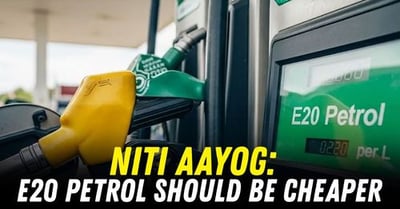
The unfolding national controversy surrounding alternative energy standards has entered a critical phase as structural debates intensify over the speed of execution. On July 12 2026, widespread discussions erupted across the country following a dramatic legal hearing in the Supreme Court concerning public petitions that directly challenge the rapid implementation of 20 percent ethanol blended petrol, widely known as E20 fuel. The legal friction grew significantly after top government legal representatives referred to the current phase of the fuel deployment as an ongoing experiment during formal court records, which instantly sparked intense reactions from consumer groups and opposition lawmakers. Although administrative ministries quickly issued official statements clarifying that the strategic reference was meant only for managing supply logistics rather than the safety of the fuel itself, the sudden development has forced the original 2021 NITI Aayog policy blueprint right back into the center of public attention.
The technical foundation of the current public anxiety is rooted deeply within the original policy guidelines established during the initial planning phases of the alternative energy program. The initial NITI Aayog roadmap had explicitly suggested a highly gradual transition, advising that standard E10 fuel should remain globally available across all local stations until 2025 as a dedicated protection option to safeguard older, non compatible engines from potential operational complications. Furthermore, the initial baseline documentation openly acknowledged that switching to a high blend would cause a noticeable drop in overall vehicle performance, estimating a fuel efficiency loss of 6 to 7 percent for standard four wheelers designed for older fuel metrics. As regular daily commuters increasingly take to digital platforms to share severe complaints of sudden mileage drops and engine knocking, critics argue that the government accelerated the widespread rollout without putting in place the safety buffers recommended by its own advisory panels.
The active friction highlights a deep systemic challenge regarding how high level environmental mandates interact with practical consumer protection on the ground. While the Ministry of Petroleum and manufacturing associations aggressively point to a 2021 study by the Automotive Research Association of India to prove that the blend does not cause major damage to heavy metallic parts, the same study explicitly warned that standard rubber fuel lines, internal gaskets, and vital sealing rings show much faster rates of physical deterioration when exposed to high ethanol concentrations. This mechanical reality means that everyday vehicle owners are facing the unexpected burden of premature part replacements and escalating maintenance bills. By forcing a single distribution standard at regional pumps and denying consumers access to traditional pure options, the administration has left the public feeling like involuntary participants in a massive economic transition before local repair networks are fully equipped to handle it.
Looking at the broader economic picture, the federal administration strongly maintains that the alternative energy push remains an absolute necessity to insulate the domestic treasury from unpredictable global energy shocks. Top financial officials recently shared that the aggressive blending program has successfully protected approximately 1.90 lakh crore rupees in valuable foreign exchange reserves by cutting down international crude oil import requirements since its early rollouts. However, as regional political groups demand an immediate halt to the program until comprehensive independent audits are fully completed, the state faces the difficult challenge of balancing national balance sheets against massive consumer dissatisfaction. The coming months will show whether the government will introduce flexible choices at local filling stations or if the persistent mechanical and financial anxieties of the motoring public will force a complete structural overhaul of the green energy roadmap.