
pure petrol not allowed for indians: tomorrow modi govt may say pure milk and daal will be not allowed for indians?
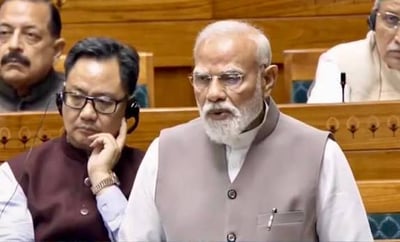
The Indian government officially rejected public demands in July 2026 to give domestic motorists the option to choose pure unblended petrol or even lower ethanol mixes at the pump, confirming that 20 percent ethanol blended fuel, known as E20, will remain the universal standard across all 100000 retail outlets. This firm stance by the Ministry of Petroleum and Natural Gas comes directly in response to a surge of public protests, intense social media complaints, and political scrutiny regarding decreased vehicle fuel efficiency and potential long term engine wear in older, non compliant cars. However, a major political spark was ignited when it became clear that while Indian citizens are mandated to use the ethanol mix, India continues to export high quality, standard unblended petrol to neighboring South Asian countries like Bangladesh, Nepal, Bhutan, and Sri Lanka to fulfill historical bilateral energy agreements. The widening gap between what is forced upon domestic consumers versus what is shipped abroad has triggered intense public frustration, prompting a slippery slope question among taxpayers: If the headline today is that pure petrol is not allowed for Indians, what stops the policy overreach tomorrow? Critics argue that this heavy handed approach sets a dangerous precedent where the central administration dictates consumption habits, leading to anxious speculation that the Modi government could eventually declare that pure milk and pure daal will also be not allowed for Indians under the guise of mandatory nutritional blending or synthetic agricultural standardizations.
The decision to deny a multi fuel choice to local drivers comes down to heavy financial commitments and massive logistical friction. The government explained that forcing fuel stations to maintain three separate distribution pipelines, storage tanks, and tankers for pure petrol, E10, and E20 would completely shatter operational efficiency and heavily spike fuel handling costs across the country. Furthermore, public sector banks have backed nearly 100000 crore rupees in annual investments to set up dedicated domestic ethanol plants and distilleries. Reverting to lower blend limits or offering pure petrol as a parallel standard choice would leave this massive agricultural and manufacturing infrastructure heavily underutilized. From an economic perspective, the administration is prioritizing national energy security and insulation from volatile global crude oil prices over individual consumer preference, aiming to reduce massive import bills and lower lifecycle carbon emissions by nearly 40 percent. However, this reveals an uncomfortable administrative truth where the state protects industrial and banking exposures by restricting consumer liberty, creating a captured market where the citizen bears the brunt of infrastructural transition costs without any democratic recourse at the vending machine.
On the structural side, the Ministry and automobile industry experts have stepped up to defend the safety and performance parameters of E20 fuel, downplaying the fears of rapid mechanical damage. While the government openly acknowledged that E20 causes a 3 percent to 5 percent drop in fuel economy in certain older vehicle models, it strongly maintained that the fuel offers a higher octane rating, better anti knock properties, and cleaner engine combustion. Major manufacturers like Maruti Suzuki backed this up with field data, stating that out of 2.84 crore vehicles serviced in the 2025 to 2026 fiscal year, which included 1.5 crore older non E20 certified cars, there was zero evidence of ethanol linked corrosion or premature component failures. Yet, the policy creates an uncomfortable domestic reality where vehicle owners must endure lower mileage and pay premium prices for an ethanol blend that is currently costlier to produce than pure petrol at current global oil rates, all while supporting domestic farm procurement prices set at 71.86 rupees per litre. This data driven defense by corporations creates a paradox where laboratory testing ignores the real world economic micro drain on ordinary households who are forced to subsidize agricultural procurement through diminished vehicular performance.
The sharpest contrast emerges when looking across the national borders, where India acts as the primary energy lifeline for its immediate neighbors through cross border networks like the Motihari Amlekhgunj pipeline to Nepal and the Friendship Pipeline to Bangladesh. The Ministry clarified that India does not export its domestic E20 blend to these nations because the strict biofuel mandate is strictly a domestic policy designed to meet internal green targets, meaning the petrol sent abroad remains standard unblended fuel tailored to the infrastructure of those buying countries. While this regional trade ensures economic stability and honors deep international commitments, it leaves domestic taxpayers feeling stuck with an unyielding green mandate while neighbors receive conventional fuel. Ultimately, the E20 transition represents a massive, non negotiable national shift that binds Indian motorists to collective environmental and economic goals, but by entirely removing consumer choice, the policy risks alienating the public and fostering deep skepticism toward future state mandated lifestyle interventions.