
Nitish Kumar JD(U) Merger With BJP Speculation Raises Big Questions: Nitish Kumar & JDU Name Will Be Erased From Bihar History Forever?
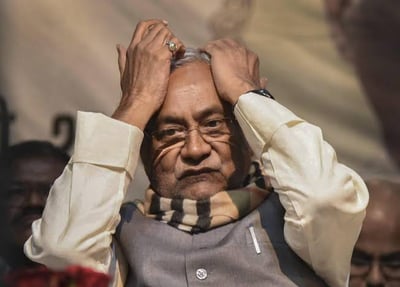
Talks about major changes inside the ruling camp of Bihar have taken the state by storm. People on the streets, local leaders in villages, and senior leaders in Patna are talking about one big topic. There are strong rumors that Janata Dal United, popularly known as JDU, could either change its official name or even merge completely with its alliance partner, the Bharatiya Janata Party. For decades, Nitish Kumar has remained the central face of Bihar governance. Because of this, even a small hint of such a historic change has created deep curiosity and anxiety among followers and critics alike.
To understand why this issue is so important, one has to look at the daily political life of Bihar. Nitish Kumar built his strength over the last two decades not just through clever governance plans, but by earning the trust of specific communities that felt ignored by older political giants. His main strength came from Kurmi and Koeri communities, often called the Luv-Kush alliance, along with extremely backward classes and women voters across rural districts. For these people, Nitish Kumar was not just a minister in government. He was their voice, their safety net, and their guarantee of dignity.
Now, rumors of a formal merger with a much larger national party like the BJP have made many grassroot workers nervous. In village tea shops and city squares, party supporters wonder what will happen to their own independent identity if their party folds into the national party. For years, JDU held its ground as a regional force that could bargain with national parties and protect local interests. If the party merges or rebrands itself, many wonder if local issues will take a back seat to broad national slogans.
The political journey of Nitish Kumar has always been full of unexpected turns. He worked with the BJP, then broke away to join hands with his old rival Lalu Prasad Yadav, and then returned back to the national alliance. Through every single turn, one truth remained untouched: Nitish Kumar was always the chief minister and the undisputed boss of his team. However, with advancing age and changing political winds, people inside Patna political circles feel that a new transition period has quietly begun. The talk of party renaming or merging suggests that leaders are thinking hard about what comes next when the senior leader eventually decides to step aside.
This dramatic shift has led observers and citizens to ask a shocking question: Will Nitish Kumar and JDU name be erased from Bihar history forever? For a leader who governed the state for two decades, the thought that his party banner and identity might completely vanish seems unimaginable to many supporters. Yet, political observers point out that when smaller regional outfits fuse into giant national structures, the original brand and independent legacy often fade away over time.
The core question that everyone in Bihar is asking touches on the loyal caste vote bank. In Indian politics, and especially in Bihar, political parties represent the hopes and social standing of communities. The voters who backed Nitish Kumar stood by him because they trusted him personally. If JDU merges with the BJP, will these voters happily follow the saffron party, or will they search for new regional options? Rival parties like Rashtriya Janata Dal are watching every single development with great interest, hoping to attract any group that feels left out during this reshuffle.
Local leaders from the backward classes feel a quiet sense of worry about their personal political futures. Within JDU, small community leaders always had direct access to high leadership and enjoyed strong representation. In a massive national party with thousands of workers and complex command chains, these local leaders worry they might get lost in the crowd. They fear that their unique regional concerns, like specific job reservations, welfare programs, and local development projects, could lose priority under a centralized national agenda.
At the same time, supporters of a closer tie-up between the two parties believe that joining hands completely could bring long-term stability. Their argument is simple: running a coalition government with constant negotiations often slows down work and creates regular friction. If the parties join forces under a single banner, they believe it could create an unbeatable election machine that can easily defeat regional rivals. Some believe that combining the welfare reputation of Nitish Kumar with the organizational strength and popularity of the national leadership could form a powerful political team for future elections.
Yet, creating an emotional bond between two different sets of voters is never easy on the ground level. While party leaders can easily sign papers and hold joint press conferences in modern convention halls, regular voters follow their own instincts. Nitish Kumar spent years building an image as a secular, development-focused leader who appealed to minority voters and neutral citizens who were uncomfortable with hard ideological stands. If the party loses its distinct identity, those floating voters might look for a completely different home.
Across rural districts, common people share personal stories of how local governance changed their lives over the years. They talk about paved village roads, free bicycles given to schoolgirls, solar lights, and alcohol prohibition. These programs became the real identity of the chief minister. When people voted for the arrow symbol of JDU, they were voting for those direct benefits and personal respect. The big challenge for anyone planning a merger or a rebranding is whether that emotional connection can survive without the familiar old identity.
Opposition leaders are already preparing their campaign narrative around this speculation. They claim that any move to dissolve or rename JDU shows that the regional party has surrendered its historical independence. They are telling voters that regional pride is being handed over to national bosses sitting far away in New Delhi. This kind of talk can be powerful in a state like Bihar, where regional pride and social justice slogans carry huge weight during voting day.
Inside JDU offices across the state, silence and caution dominate the atmosphere. Senior legislators avoid giving direct answers to reporters, while junior workers wait for clear directions from the top leadership. Nitish Kumar himself has kept his cards close to his chest, as he usually does during sensitive political moments. Whether this talk turns into an actual merger or simply fades away as another political rumor, one thing is completely clear: Bihar politics has entered an unpredictable phase where every group is busy recalculating its future.
In the end, politics in Bihar is always decided by the ordinary citizen standing in the voting booth. If JDU decides to change its name or merge into the BJP, the move will reshape the political map of eastern India. It will test whether the legacy of Nitish Kumar can be transferred to a partner, or whether his personal vote bank will break apart into different directions. For now, the entire state is holding its breath, watching every move made by its longest-serving leader.